
It starts small.
Invisible to the eye, yeast drifts through the air, settles on fruit, waits in flour. Given warmth and sugar, it comes alive — consuming, fermenting, releasing carbon dioxide and alcohol. For centuries, humans have relied on it to leaven bread and brew beer.
For some Lehigh alumni, yeast isn’t just an ingredient. It’s a collaborator.
The Rise
In a jar on a countertop, yeast begins its work.
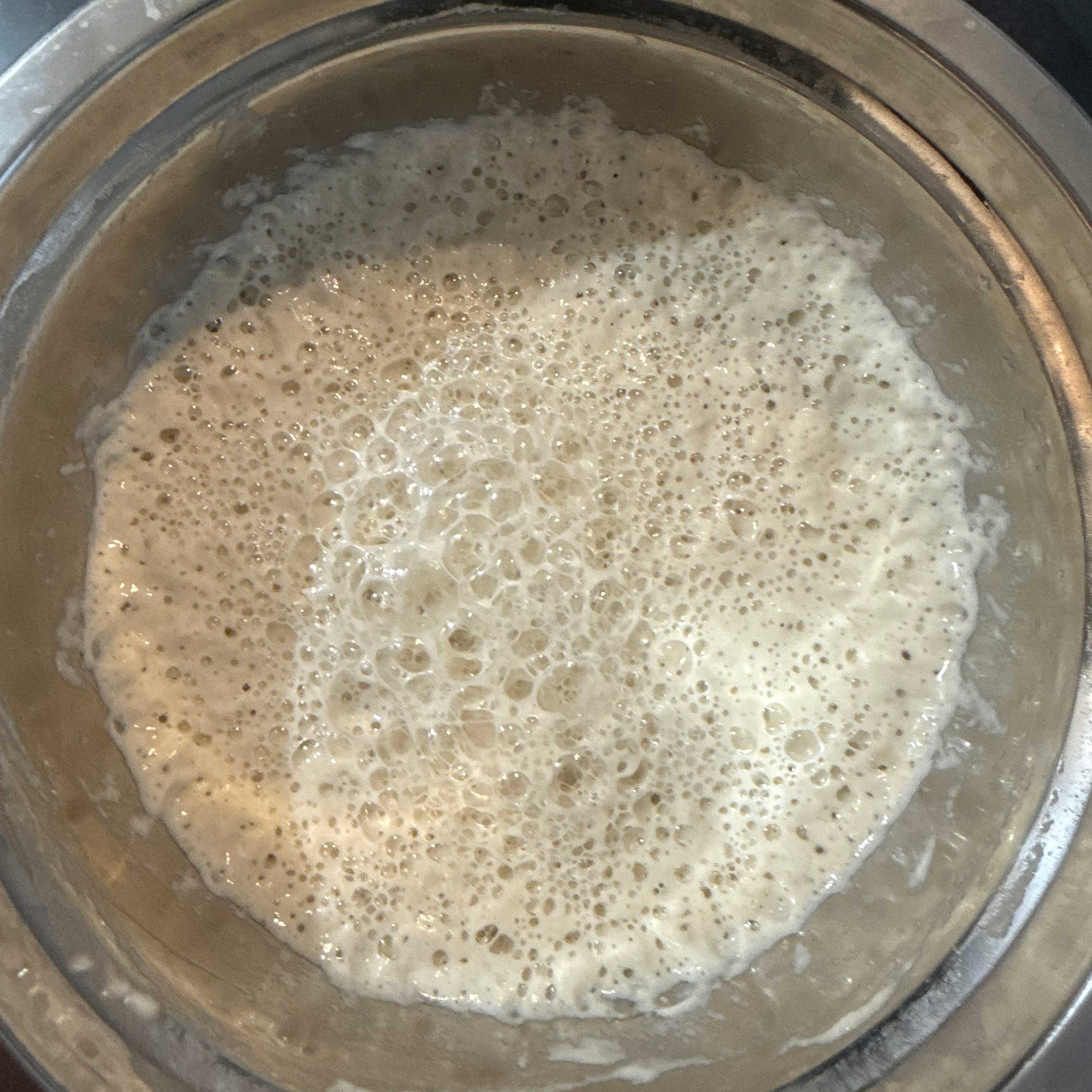
For adjunct chemical engineering professor Gorgi Pavlov ’14 Ph.D.’18, sourdough baking is more than a hobby; it’s a living system to manage. Wild yeast and lactic acid bacteria coexist in a starter, responding to temperature, hydration, and time.
To the casual baker, a loaf might feel like intuition and instinct. To Pavlov, it’s a complex, multivariable system.
“Cooking is applied chemistry and physics: heat transfer, protein denaturation, emulsification, the Maillard reaction,” he says. “Baking in particular is unforgiving because, unlike cooking, you can't taste and adjust as you go. Once something goes into the oven, the chemistry is locked in.”
In sourdough, yeast consumes sugars and releases carbon dioxide. Gluten networks formed through kneading trap that gas and allow dough to rise. Meanwhile, bacteria shape the flavor profile. A colder, stiffer dough encourages acetic acid, resulting in a sharper tang. In warmer, wetter conditions, lactic acid softens the flavor, producing a milder, creamier profile.
“It’s very similar to managing a fermentation process in a bioreactor,” he says. “Just at a more forgiving scale.”
Martina Russial ’10, who worked as a pastry chef for 15 years, sees the same precision at play.
The same foundational ingredients — flour, fat, sugar, eggs — can produce dramatically different results depending on ratios and technique.
In pâte à choux, the base of an éclair, steam does the heavy lifting. Flour gelatinizes in hot liquid on the stovetop before the dough moves to the oven, where rapidly expanding steam creates its hollow interior.
“As a holistic chef, I tell my students that it’s important to understand the knowledge that came before them,” she says. “Once you know the basics, you can start adjusting. That might be changing leavening agents, increasing baking powder, or altering chocolate ratios for texture.”
Still, bread remains her favorite example.
“I’m a huge fan of carbs,” she laughs. “There’s nothing better than fresh bread out of the oven. It’s a great example of physical processes at work, like kneading the dough to create gluten structure.”
Whether in a home kitchen or a professional bakery, yeast is alive.
“Sourdough starter makes you feel like a mad scientist,” Russial says. “You’re reliant on cultivating the yeast and treating it with respect, paying attention to its needs and adapting to them.”
The Fermentation
Scale up from the countertop to the classroom, and yeast’s role becomes even more deliberate.
In 2025, Joseph Menicucci, associate chair and associate professor of chemical and biomolecular engineering, and Steven McIntosh, professor and department chair, launched The Engineering of Brewing, Winemaking, and Distilling. The course allows students to apply chemical engineering principles by crafting their own beverages in collaboration with a local brewery.
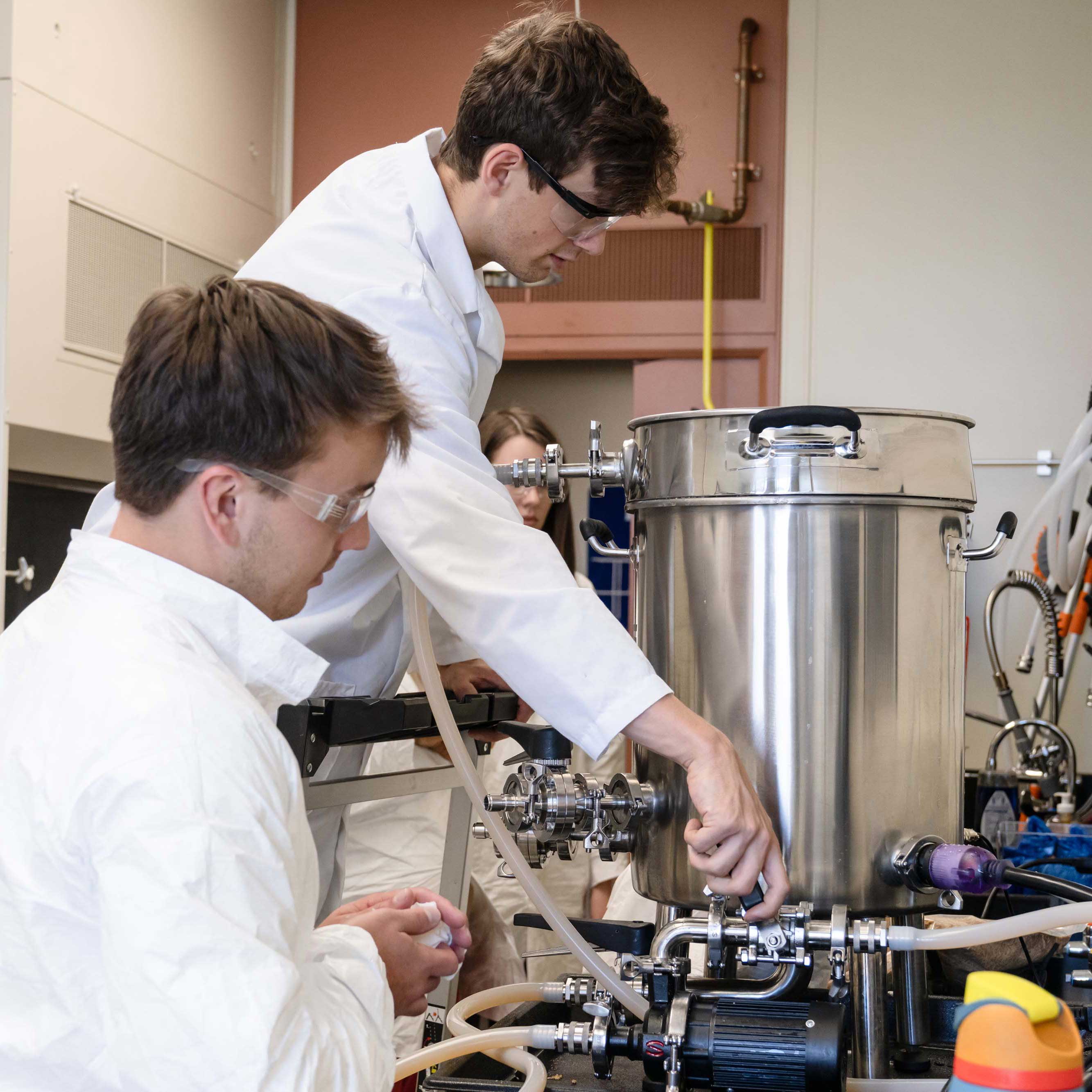
“The general idea is that grains contain sugars within their structures,” explains McIntosh. “During brewing, we break down the grain to make those sugars available for fermentation. After cooling the mixture, we transfer it to a vessel, add yeast, and allow fermentation to produce alcohol over time.”
The process may sound simple, but it demands precision. Temperature affects yeast activity. Sugar concentration determines alcohol potential. Strain selection influences flavor development.
“There’s a strong experiential component," says Menicucci. “Students design their own recipes and troubleshoot problems. They work with high temperatures, different yeast strains, and process variables. They’re thinking like engineers.”
In this setting, yeast becomes a teaching tool.
Some experiments stick to traditional beer and wine. Others stretch boundaries, exploring non-alcoholic beverages, cider, and kombucha. Some have even proposed more unconventional ideas, including a glow-in-the-dark beer.
The organism is ancient. The applications are not.
The Barrel
As a student at Lehigh, Tom Schmidlin ’92 watched a fraternity brother attempt a home brew. The idea that microscopic organisms could convert sugar into alcohol fascinated him. Soon, he began experimenting himself. He hasn’t stopped since.
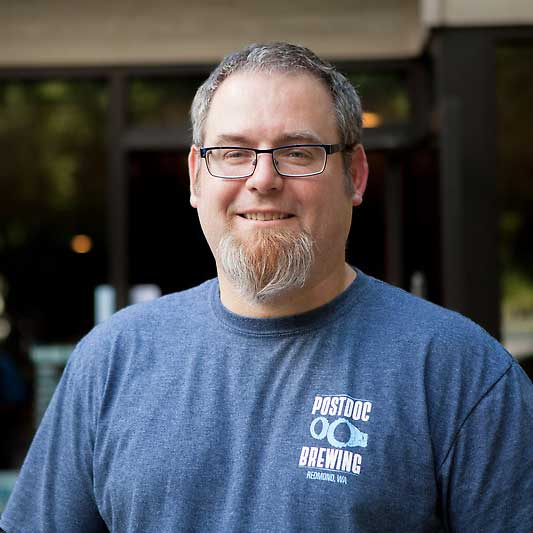
Today, as owner of Postdoc Brewing, he continues to push yeast to its limits.
He’s particularly proud of his triple IPA. Each year, he sets aside barrels and continues feeding the yeast sugar, driving fermentation until the organism naturally reaches its tolerance and dies off. The alcohol content is pushed beyond 16%, and the beer is then aged in bourbon barrels.
“The residual sugars add sweetness, and the barrel gives it a subtle bourbon note,” Schmidlin says. “It took years to refine.”
For another project, Schmidlin harvested fruit from his backyard and cultured wild yeast from it, combining it with bacteria to ferment a sour ale. It took more than 40 samples and 18 months to isolate a strain he liked.
For Schmidlin, experimentation remains the appeal. He constantly considers flavor profiles, sensitivities, and balance, aiming to create beverages that are both broadly appealing and distinctly his own.
The Common Thread
From sourdough starters to stainless steel fermentation tanks, yeast remains the constant. It works quietly. In dough, in barrels, and in sealed tanks.
But behind every crusty loaf and carefully aged ale is someone measuring, adjusting, observing, and trying again. The formulas may be scientific, but the drive to refine them is deeply human.
Small organism. Big impact.
Bake your own loaf
Yields: 1 LOAF
Prep Time: 13 HOURS
Cook Time: 40 MIN
Ingredients
400 grams bread flour
30 grams spelt flour
2 tsp pink Himalayan salt
3/4 tsp active dry yeast
2 tsp fresh rosemary, finely minced
1 ½ cup warm water
Directions
- Mix together dry ingredients.
- Add in warm water and mix with hands or wooden spoon until dough comes together in a shaggy mass.
- Cover with plastic wrap and let sit at room temperature for 8-12 hours.
- Transfer to a well-floured counter and fold 4 corners into the center so it holds a round loaf shape. Place seam side down on parchment paper.
- Cover and proof for 45 minutes (as oven preheats).
- Place Dutch oven with lid in a cold oven and set to 500F.
- Wait 40 minutes for dutch oven to preheat.
- Remove dutch oven carefully and, using parchment paper, lower the loaf down into the pot. Score using baker's lame or serrated knife. Cover with lid and place in oven.
- Bake for 20 minutes. Remove lid and bake for 15-20 more minutes until golden brown on whole loaf and darker brown on edges of scoring.
- Let cool completely and enjoy with butter or olive oil.
* Store bread in linen bread bag or paper bag on counter for 3-4 days, or cut into slices and freeze.