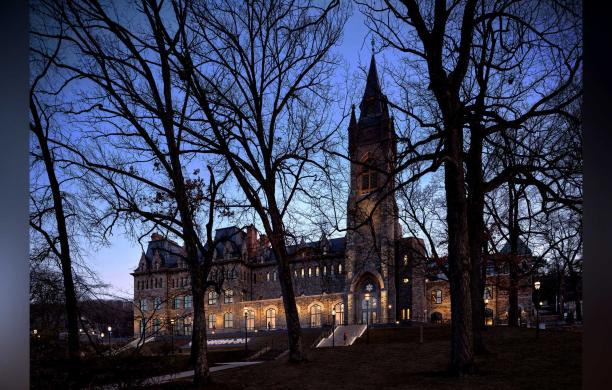

The College of Arts and Sciences (CAS) is the intellectual heart of Lehigh University, where future makers discover the joy of learning alongside dedicated faculty in a quintessential liberal arts environment.
Under the leadership of Robert A. Flowers II Ph.D.’91 P’27, the College of Arts and Sciences continues to thrive and grow as a center of academic excellence and innovation. The Herbert J. and Ann L. Siegel Dean brings deep institutional knowledge and distinguished scholarly achievement to the role. As an award-winning teacher, chemist, scholar, and Fellow, Flowers exemplifies academic leadership and inspires the college to reach new heights.
Lehigh’s largest, most selective, and most diverse college, CAS educates students across the university, offering rigorous academics and life-launching experiences that harness creativity and encourage bold, unconventional thinking. Interdisciplinary learning paired with unmatched hands-on opportunities empowers students to become highly sought-after leaders — global citizens, visionary thinkers, and creators prepared to lead in an ever-evolving world.
Exploration at CAS is enriched by the freedom to cross disciplines and apply knowledge with purpose. Whether exploring the fundamental nature of the universe through quantum physics, advancing biological research to better understand and improve human health, addressing complex urban challenges, or protecting marine ecosystems, students engage in groundbreaking research, creative work, and real-world projects. This integrative approach cultivates insight, imagination, and impact, shaping not only career-ready graduates but future-makers.

What is the College of Arts and Sciences’ formula for success? Learn these top five things you should know about the CAS and find out!
It’s home to interdisciplinary connections. With 18 departments, 10 interdisciplinary programs, and six specialized research centers, the College of Arts and Sciences is designed for collaboration. Serving 2,188 undergraduate students and 322 graduate students across 68 majors and 56 minors, CAS enrolls 40% of Lehigh undergraduates in its programs and courses. Big challenges don't fit neatly into one academic box, so the college brings together experts from different fields to tackle them from multiple angles.
When faculty and students collaborate across disciplines — supported by over $14 million in research expenditures in 2024–25 — they bring together diverse perspectives and methods to develop stronger solutions. Climate change, for instance, isn't solely a scientific issue. Chemists may design sustainable materials, economists analyze policy incentives, and communication experts craft messages that drive action. Together, these perspectives lead to deeper understanding and greater impact.
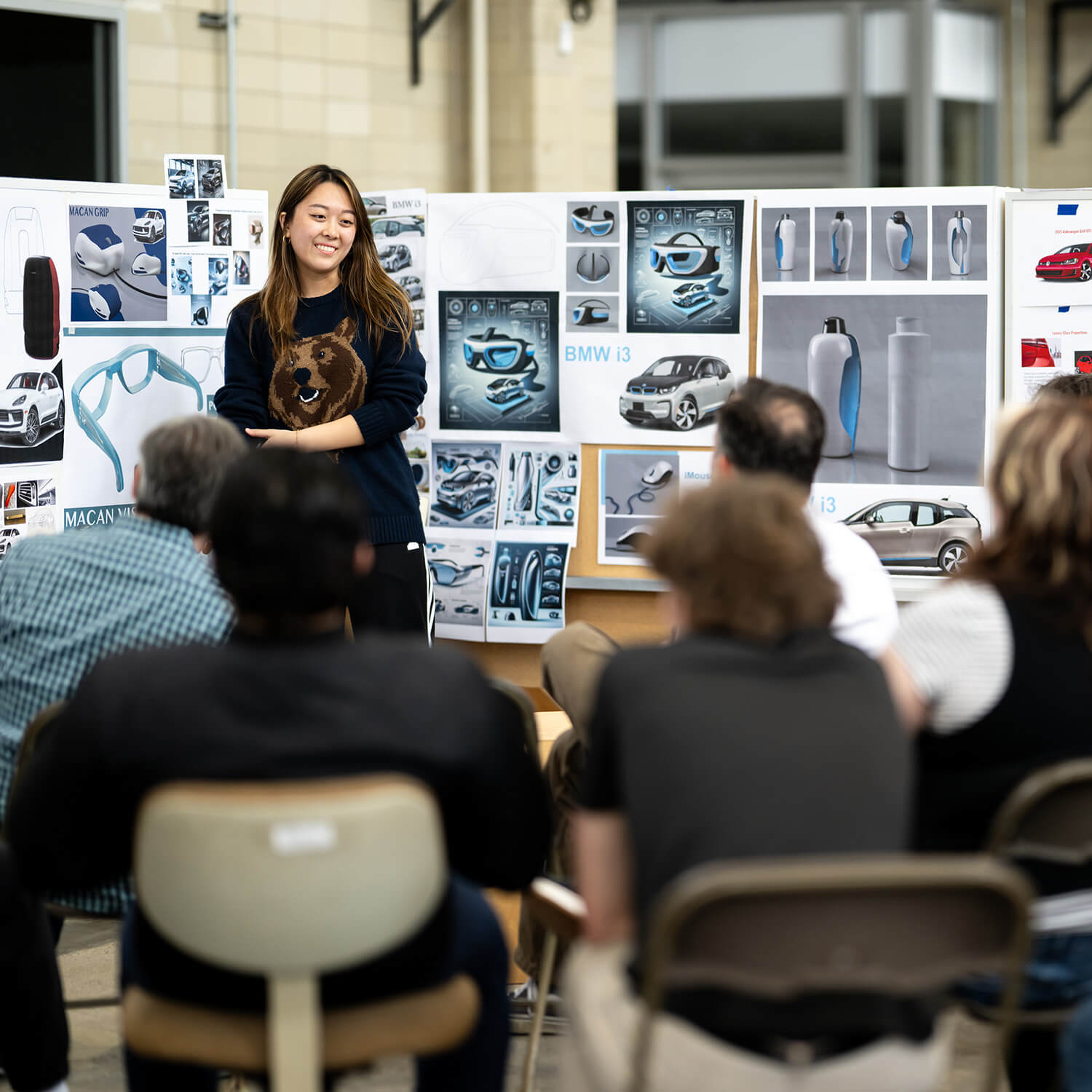
AAD students participate in critiques of their work by department faculty. This interdisciplinary approach prepares students not just for their first job, but for a lifetime of curiosity and growth. Building on Lehigh’s long-standing tradition of strong post-graduation success, an impressive 90% of our graduates were employed, continuing education or pursuing military or volunteer service within six months of graduation. CAS graduates earn an average starting salary of $59,000, and 82% complete at least one internship or experiential learning opportunity that bridges classroom learning with real-world application.
Teaching and research reinforce each other. Teaching and research pull faculty in different directions at many universities — but not in Lehigh’s CAS. Here, the two go hand in hand. Professors choose this community because they can advance their research while building close mentoring relationships with students.
This means new discoveries don’t stay confined to the lab or journals; they move directly into the classroom. Students aren’t just learning established knowledge; they’re part of its creation. This hands-on, inquiry-driven approach develops innovative thinkers who challenge assumptions and explore new possibilities.
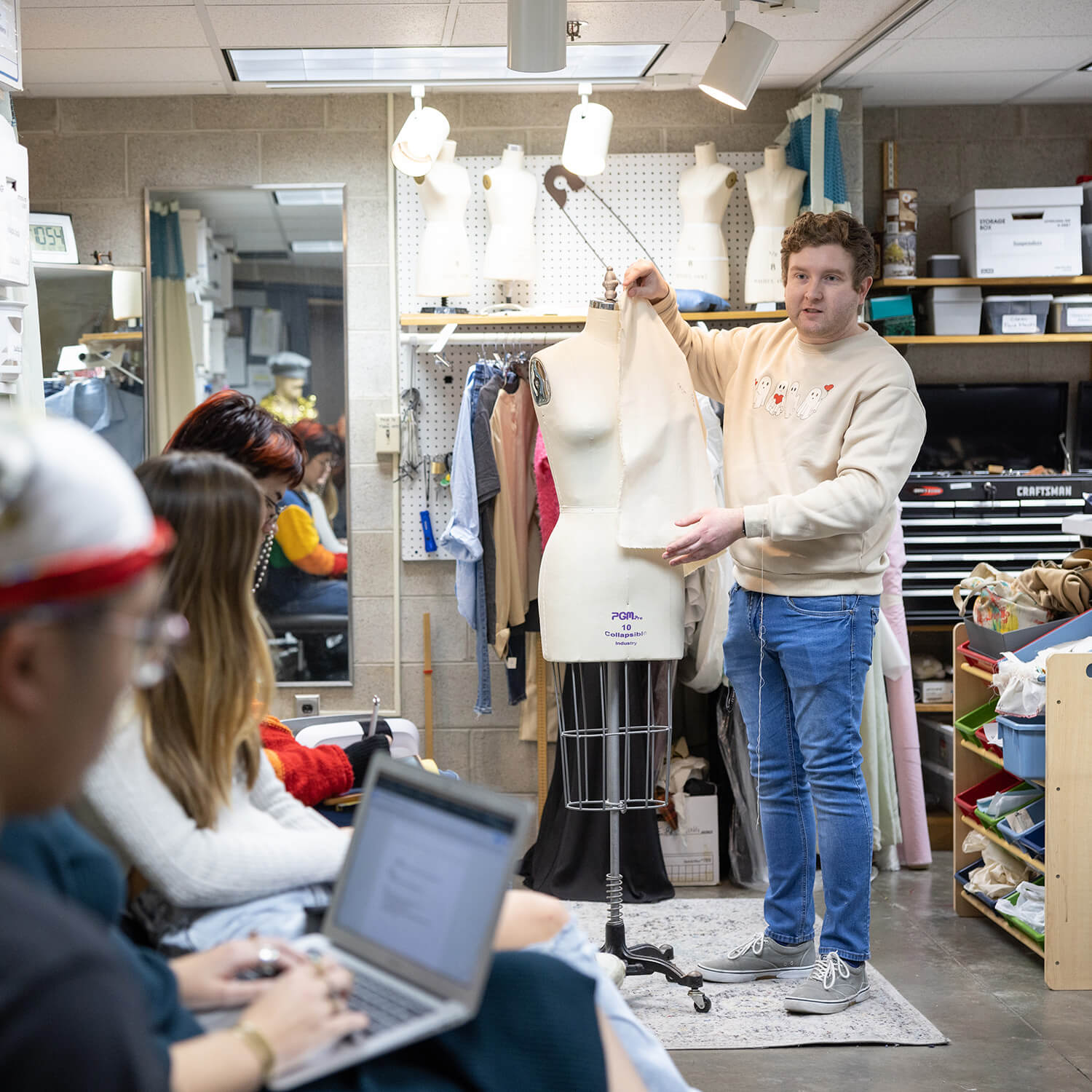
Academics in the theatre department. Creativity is woven throughout the curriculum. Creativity at CAS is not abstract. It emerges from interdisciplinary thinking that builds mastery, adaptability, and purpose. It begins with the college’s shared commitment to teaching and research and extends to the ways the arts and creativity infuse all programs. It is evident in Lehigh’s Arts and Engineering program, one of the oldest intercollege programs in the country.
Creativity in the curriculum builds skills for leadership, innovation, and lifelong learning, leading alumni back to Lehigh and to each other. We create opportunities to invite our local community onto campus and into our innovative, inclusive, and optimistic ways of seeing the world and striving to make it better. That ethos is exemplified by Marc Falato ’87, chair of the College of Arts and Sciences Advisory Council and co-founder of ZenDog Productions, whose interdisciplinary background in global studies, business, and the arts has helped bring award-winning Broadway productions to life while expanding access to the performing arts for underrepresented audiences.
Along with its academic departments, the college is home to a world-class art collection, a widely recognized performing arts center, and exceptional and growing programs in art, architecture, design, music, and theater.
When scientists, social scientists, and humanities scholars collaborate with artists and designers, they approach problems differently — visualizing data in new ways, communicating ideas more effectively, and developing innovative solutions they might not have considered in a more traditional setting. The arts are opening doors and creating space for those conversations to happen, while creativity drives critical thinking that solves real-world problems and leadership that’s ready to take on the most pressing issues of our time. Over the past 50 years, Lehigh has prepared more than 1,600 artists, designers, and creative professionals for impactful careers, strengthening the arts and culture sector locally and globally.
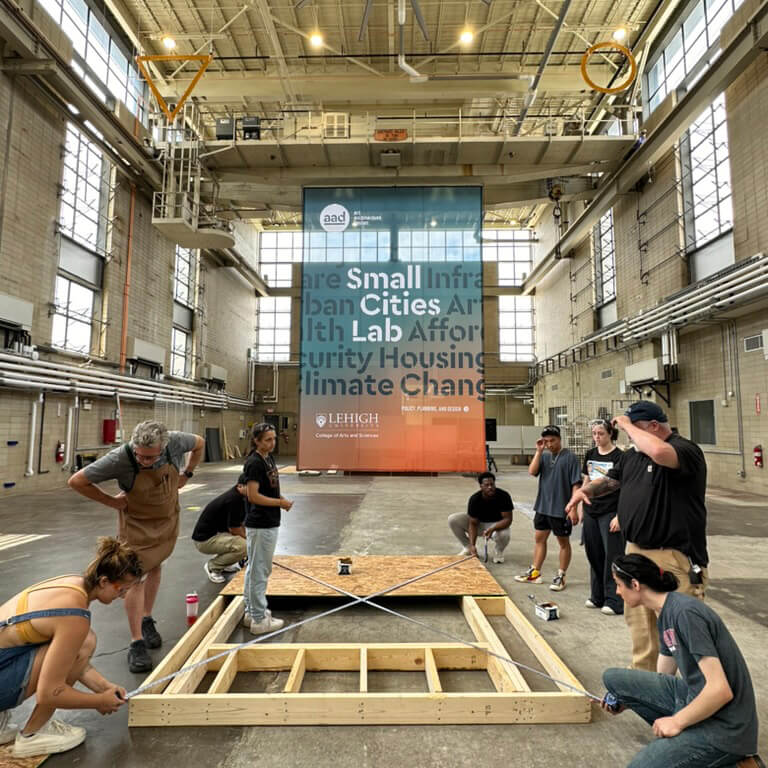
The Small Cities Lab offers an interdisciplinary approach to place-based research and participatory design. Problem-solving is part of CAS’s DNA. The College of Arts and Sciences has always been focused on tackling real-world challenges. The College has a long tradition of applied, problem-focused research that enhances Lehigh's already vibrant innovation ecosystem.
Progress happens at the intersections of disciplines, ideas, and communities. The College of Arts and Sciences has long been a foundation of intellectual excellence at Lehigh, grounded in the enduring strengths of a liberal arts education. Today, that tradition fuels a growing engine of discovery and innovation.
From the nationally recognized Small Cities Lab to the pioneering research center Lehigh Oceans and our faculty's leadership in Lehigh’s first university-wide research center — the Center for Catastrophe Modeling and Resilience — CAS continues to chart bold new directions.
Its world-class education launches success beyond the classroom. While rigorous academics build essential knowledge and critical thinking skills, it is through immersive experiences — such as study abroad, internships, creative endeavors, and original research — that students discover purpose, gain confidence, and learn to navigate the complexities of the world. These opportunities are not luxuries; they are necessities that transform curiosity into experience and education into action.
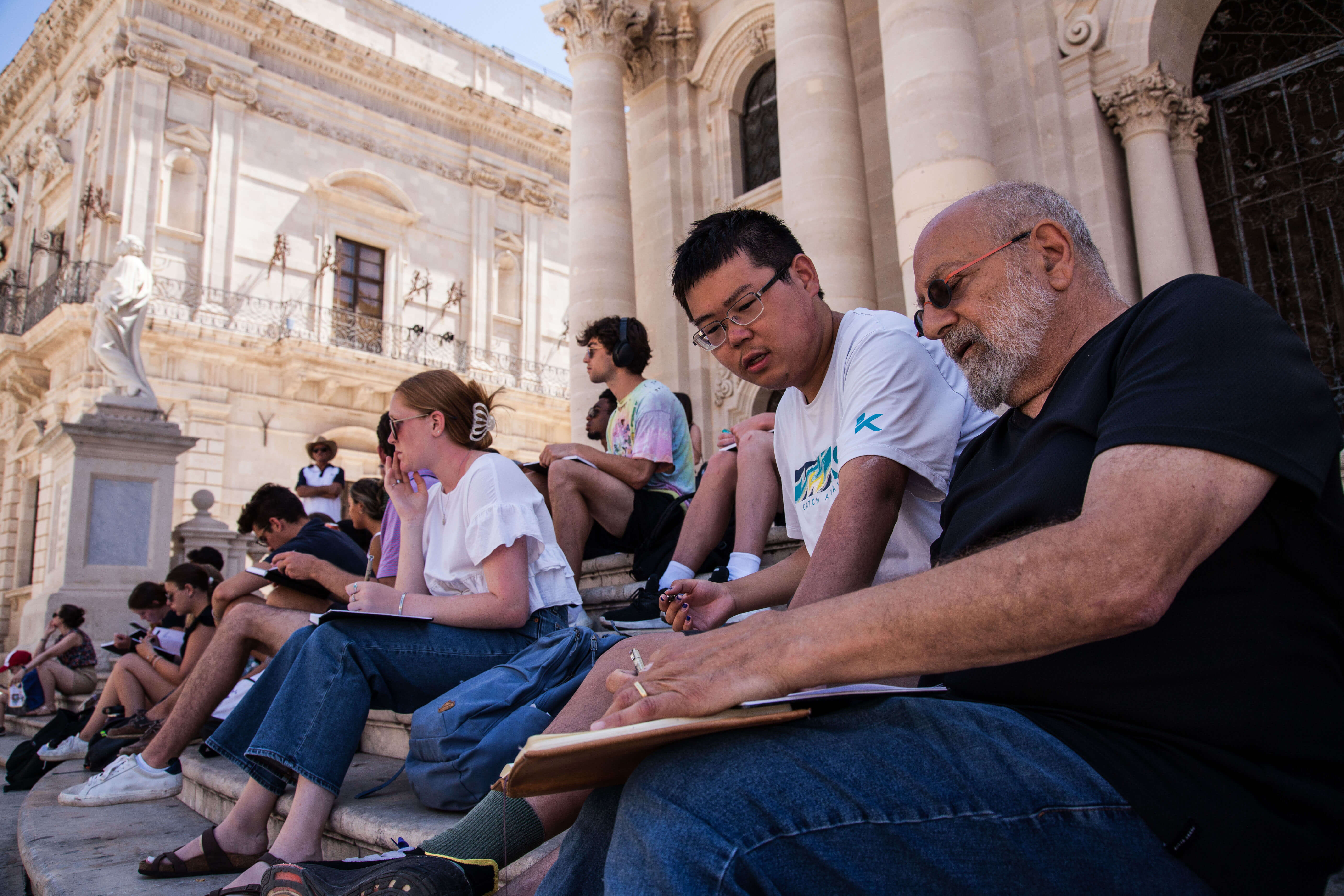
Art, Architecture, and Design in Sicily Experience is critical for undergraduate and graduate students, whose diverse interests and intellectual agility prepare them for careers that may not yet exist. Internships, study abroad, original research, and creative endeavors enable students to test-drive their interests and potential while building professional networks and developing a strong sense of self-efficacy. These opportunities forge valuable connections between talented students and the diverse range of organizations and alumni eager to benefit from their skills and passion.
Ambitious students like Liz Matthews ’26, Vitalii Martyniak ’26, graduate student Jace Curran ’22, and trailblazing alumni including Ariella Scalese ’14, Brittany Bartlett ’11, CJ McCollum ’13 and Elise Esposito ’13 ’15G, Jon Ballis ’91, Jared Della Valle ’93, and Andrew Knoll '73 and Daniel Richter '73 embody the power of a rigorous CAS education grounded in experiential learning, translating opportunity into advanced study, adaptable careers, and the confidence to become future-makers beyond Lehigh.
Follow everything happening in the College of Arts and Sciences by visiting its website and staying connected through social media.
To continue shaping the future of scholarship and innovation, Lehigh’s College of Arts and Sciences relies on the support of its alumni and partners now more than ever. Please consider making a gift or contact Natasha de Luna, associate dean of development for the College of Arts and Sciences, to learn more about initiatives and ways to advance the college’s mission.