

Player 326, better known as Jason Anhorn ’95, has always been a risk-taker. His “say yes” mentality has led him to career highs he never imagined and, most recently, to competing on season two of Netflix’s Squid Game: The Challenge.
Based on the original scripted drama of the same name, the reality competition show is nearly impossible to prepare for. Still, in many ways, Anhorn has been developing the skills needed to succeed for most of his life.
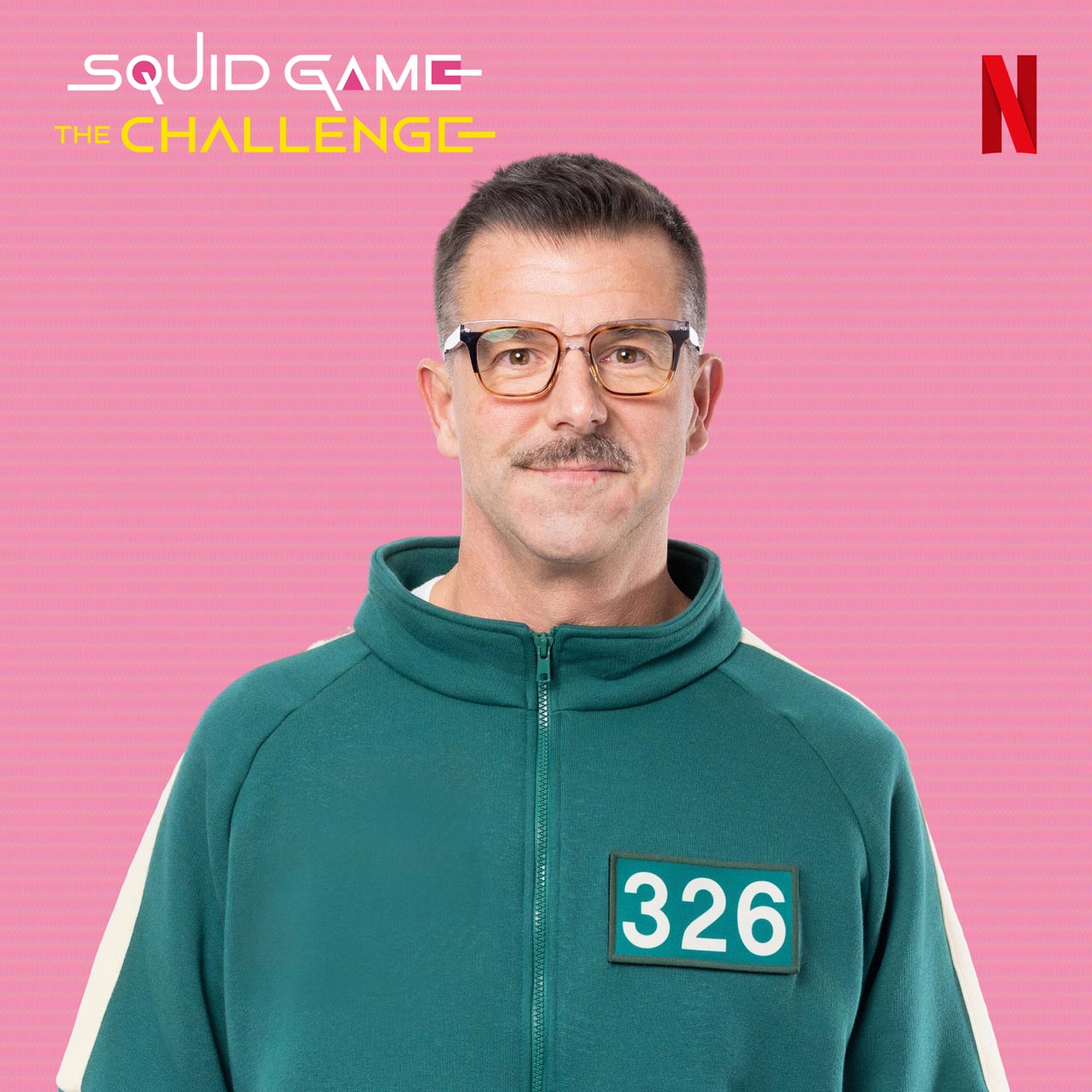
During his time at Lehigh, Anhorn served as an admissions ambassador, honing his ability to connect with others and find common ground quickly. He also prioritized fitness, competing as a member of the rowing team and training regularly in CrossFit. Together, these experiences helped develop the adaptable, people-oriented competitor well-suited for the games.
“The value of my degree goes up every year,” he says. “Thirty years later, I can look back and say with confidence that Lehigh shaped who I am as a person.”
Anhorn earned his degree in mathematics. While the major doesn’t directly align with his career path, his time at Lehigh, including the extracurriculars he pursued, helped him discover a passion for helping others and making a meaningful impact.
Today, Anhorn serves as chief executive officer at Council for Relationships, a nonprofit based in Philadelphia. Coincidentally, the opportunity to compete on Squid Game: The Challenge arrived just as the organization was considering offering him the role. The team ultimately supported his decision to pursue what he describes as a once-in-a-lifetime opportunity.
When Anhorn first received the call about the show, he was in disbelief. A longtime fan of reality television, he had previously applied to shows like The Amazing Race and Wheel of Fortune with his sister. So when he submitted an application for Squid Game: The Challenge, he didn't think much of it.
That changed around Thanksgiving 2024, when the possibility became real.
After a call with a producer based in Los Angeles, Anhorn advanced through several rounds of interviews, psychological evaluations, social media screenings, and background checks.
Before he knew it, he was boarding a flight to London to compete.
“I always wanted to know if those kinds of shows were scripted,” he says. “I wanted to see how it was filmed and what it was like to function with cameras everywhere. Winning the money is mostly luck and chance, but seeing everything behind the scenes was incredible.”
It didn’t take long for Anhorn to realize the competition was all too real. Contestants weren’t allowed sugar or caffeine, meals were intentionally bland, and rest was limited. Over the course of 10 days, he lost 12 pounds and struggled to sleep in the massive dormitory. For Anhorn, however, the highs far outweighed the lows.
Among the most memorable challenges he faced were the six-legged pentathlon — where he volunteered for gonggi, widely considered the most difficult mini-game in the race — and catch, the game that ultimately led to his elimination.
Catch was a one-on-one elimination challenge in which a designated thrower tossed a tennis ball to a catcher standing on a colored dot. As the game progressed, the distance between them increased, making each round more difficult.
The person in front of Anhorn was eliminated, allowing him to advance to the center automatically. He threw the ball to another player, but the catcher missed. As a result, ink packs concealed under their vests exploded, marking both competitors as eliminated.

“We had been standing for 12 hours by the time they reached my spot in line,” he recalls. “By then, we could barely see straight, so it wasn’t as simple as it looked.”
He wasn’t alone in his exit. Thirty-three players were eliminated during that single game, leaving just 74 competitors remaining from the original 456.
In total, Anhorn spent about 10 days in London. While he didn’t walk away with the $4.56 million prize, he crossed off a bucket-list goal, formed lasting bonds, and made cherished memories.
“I stayed true to myself,” he says. “I didn’t want to be someone I wasn’t. There are tactics you can use to get airtime, but they come with consequences. I was who I was, and I made real friendships beyond the scope of the show.”
When asked what advice he would offer others, Anhorn doesn’t hesitate. “You only live once, so why not?” he says. “Push yourself. Take opportunities to meet new people, build connections, and try something new. In today’s world, that matters more than ever.”