

At 101 years old, Alan Shapiro ’48 still looks to the sky with a sense of awe. It’s a lifelong habit that began with childhood dreams of flight and carried him through World War II as a pilot.
Takeoff
In the days leading up to his 18th birthday, Shapiro eagerly waited for the chance to enlist in the military. In the meantime, he began pursuing a degree at Lehigh, close to his family in suburban Philadelphia. The day he came of age, he rushed to enlist in the Army Air Corps aviation cadet program.
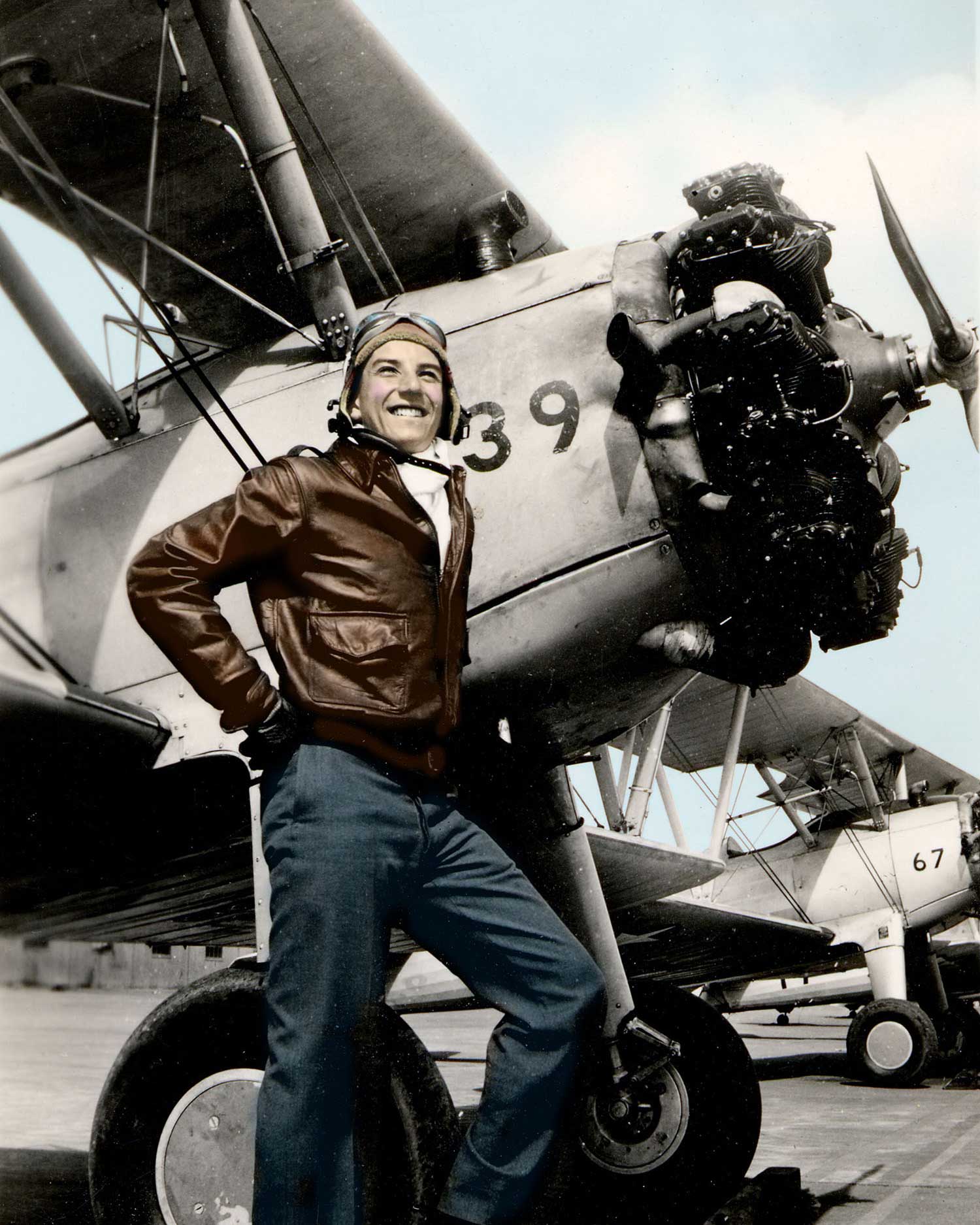
Shapiro felt no hesitation. He simply wanted to fly.
“I was so intent on flying that there was no room for fear,” he says. “And when you’re sitting at the controls, you’re only focused on flying the airplane.”
As part of the aviation cadet program, the military sent prospective aircrew members to a small college in western Pennsylvania for training. There, they completed drills and studied physics, weather, and memorization exercises. After transferring to a classification center, where he faced a battery of physical and psychological exams, Shapiro was selected for pilot training.
On August 4, 1944, Shapiro received his wings and commission as a second lieutenant and waited for assignment to a fighter squadron. Instead, he and the rest of his class — 80 young men — were told they were headed on a special mission.
There was just one catch.
They wouldn’t be flying planes. They would be flying gliders into combat.
These engineless, plywood aircrafts were often called “flying coffins” because of their high fatality rate and the one-way crash landings required of their pilots.
When Shapiro got to England and the glider mission was confirmed, the reality set in. Sitting down to write a goodbye letter to his family, he found himself in tears.
The next day, he woke up and was handed a submachine gun and two hand grenades — weapons he’d only seen in movies.
Then, through divine intervention or sheer luck, the mission was called off.
Shapiro and his squadron had been promised transfer to fighter squadrons if they survived the glider operation. With no fighter openings available, he was instead assigned to strategic flying missions in a twin-engine C-47 aircraft.
Even in the midst of war, a sense of wonder often broke through the moment he hit the sky.
High Altitudes
“We were just kids,” Shapiro says of himself and his fellow pilots. “We looked for things to push the envelope.”
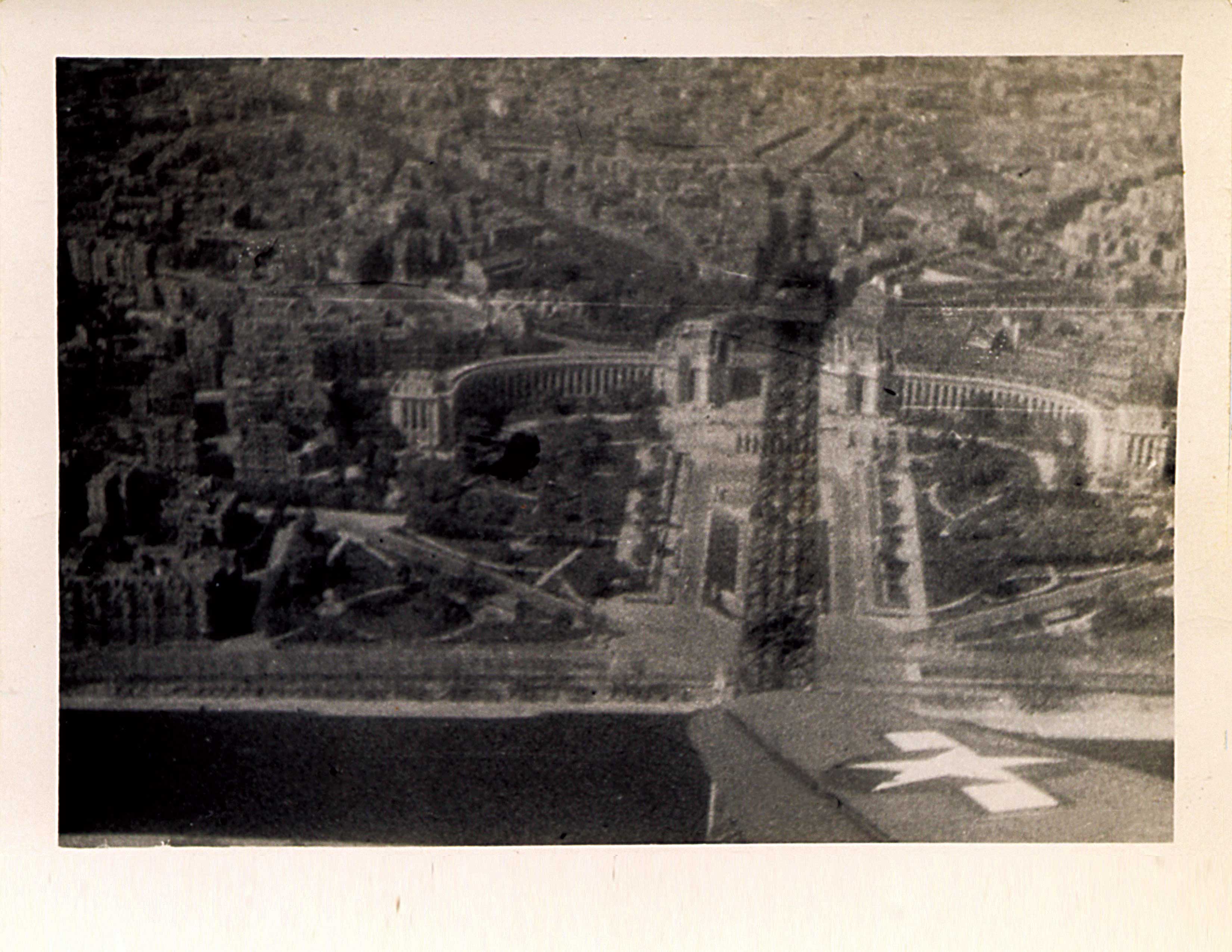
He remembers flying over Paris and taking photographs with a camera his mother had given him. On one return flight, he spotted a Volkswagen parked below in a German airfield the Allies had just overrun. Half joking, he suggested they capture it.
So they did.
They landed, hotwired the car, loaded it onto the aircraft, and flew away — giddy as the young men they were.
On another flight, returning from a mission over Germany, Shapiro flew near the Eiffel Tower. For a moment, he considered tapping the top of the tower with his wingtip. Realizing the danger, he instead flew as close as he dared to snap a photograph, making it appear as though the wingtip touched the tower.
During his time in the service, Shapiro participated in several major operations, including Operation Market Garden, the Battle of the Bulge, and Operation Varsity.
In the Battle of the Bulge, just before Christmas, one of his roles was to fly in an artillery piece to help the 101st Airborne break out of encirclement. He successfully delivered the 105mm Howitzer to the front lines, but brutal weather prevented him from flying out. That winter was one of the coldest Europe has ever seen.
While he was grounded, the base received warnings that German soldiers who spoke English had infiltrated Allied forces while wearing American uniforms. To verify identities, soldiers were told to ask: “Who did Babe Ruth play for?” Anyone unable to answer correctly was to be treated as an enemy and shot on the spot.
“Fortunately,” Shapiro says, “we knew our baseball.”
Eventually, the weather cleared enough for Shapiro to fly to an emergency landing strip on the English Channel.
On Christmas Day, he stood on the flight line watching medical planes arrive carrying badly wounded British soldiers.
“I’lll never forget the women at the base — female Air Force personnel and Red Cross nurses — standing in a receiving line,” he says. “One of them would place a sprig of holly on a wounded man’s chest and say, ‘Welcome home for Christmas. You’re alright now.’”
A Smooth Landing
After a little more than two years, Shapiro returned to civilian life.
He had originally come to Lehigh intending to study chemical engineering, but his wartime experiences changed his perspective.
“In my first semester before service, I didn’t even understand the textbooks,” he says. “What I discovered was that I didn’t know anything. A friend sent me a dictionary, and I studied that. When I got back after the war, I transferred out of engineering and majored in English and history. That turned out to be my sweet spot.”
Recognizing the education he had gained through life experience, Lehigh granted him a full year of study for free. It’s something Shapiro says he has never forgotten.
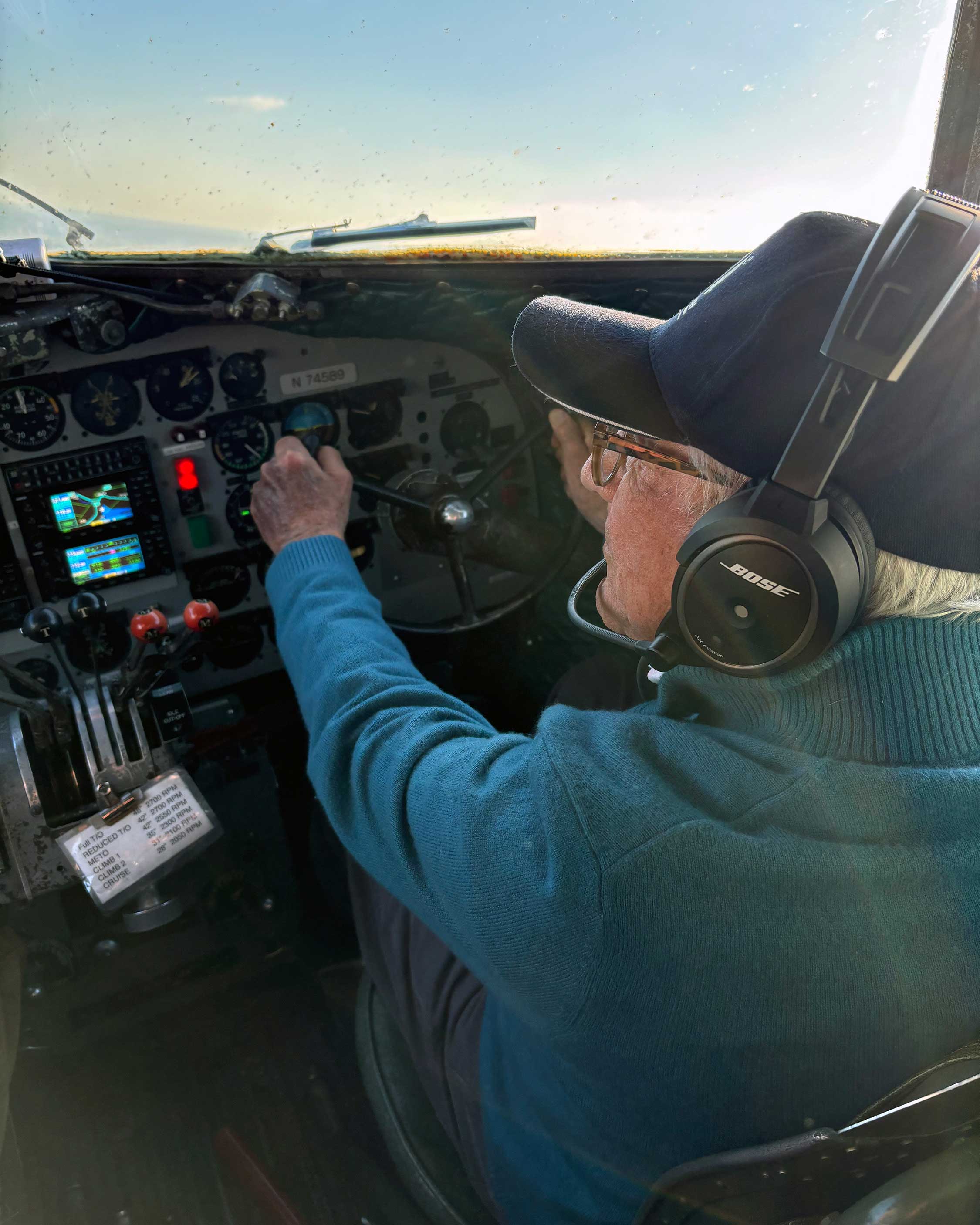
Today, Shapiro is a veteran in demand, especially as the United States approaches its 250th anniversary. He visits schools, retirement communities, and appears in documentaries to share his story.
In 2024, during the 80th Anniversary of D-Day in Normandy, Shapiro was given the honor of piloting an 80-year-old C-47, the same type of aircraft he flew during the war, over the beaches of Normandy.
Shapiro, who retired at 98 as president of an advertising agency, is still whip-smart, and he’s deeply grateful for the life he has lived. He and his wife, Peg, have built a large family of children and grandchildren.
“It’s a whole new world,” he says. “I feel like I’m getting younger because I’m exposed to people from all walks of life. I’m retired, but I keep busy. My life is wonderful.”
“One person told me my life seems like an adventure,” he adds with a smile. “It really was — one after the next.”

In This Image: Alan's first flight!

In This Image: Flying over the the Rhine river in Koblenz, Germany in April 1945

In This Image: Aircrafts in flight

In This Image: On a mission over Germany

In This Image: Grounded gliders

In This Image: Aircrafts flying in formation

In This Image: C-47 aircrafts on a runway