

Snip. Hobble. Swish.
Those are the familiar sounds for men visiting urologists in March for a, gulp, vasectomy.

The term alone can make many men wince — just the thought of a scalpel near their family jewels can bring on a twang of stomach pain.
But that doesn’t mean men aren’t lining up for the procedure before March Madness.
Many across the country use the start of the NCAA basketball tournament as an opportunity to schedule the procedure, then settle in with a bag of frozen peas, a spot on the couch, a cold beer, and countless games.
The opening weekend of the tournament makes the perfect conditions for rest and recovery.
Urologists call it Vas Madness. They also see a spike before the opening rounds of the Masters, one of golf’s four major tournaments. They call that one the Vasters.
Josh Fiske ’95, urologist at Summit Health in New Jersey, has seen it all during those popular intersections between sports and snips. Vasectomy appointments at his practice triple prior to March tip-off.
Understanding the Procedure
It’s relatively simple. He describes it as if he’s a highway engineer who has to remove a section of a bridge, drop in a divider, and seal the edges so cars can’t cross. It takes about 10–15 minutes and involves a small incision, either at a surgery center under sedation or in the doctor’s office with a local anesthetic. The location a man selects often depends on his level of anxiety.
The procedure, because of the anatomy involved, makes many men nervous. That’s why Fiske sees no-shows in about one out of every 20 men. But those guys usually come back, sometimes after having another child or a pregnancy scare.
“After they have a fourth, they decide they don’t want enough for a basketball team,” says Fiske.
He notes how men can worry about the permanence of the procedure.
Of course, the procedure can be reversed, but it comes at a high cost, involves a two- to three-hour micro-surgery, and has about a 50% success rate, so Fiske advises men not to have a vasectomy unless they are absolutely sure they don't want any more kids.
He has seen men approach the procedure in every way.
Some men come to consultation appointments with their spouses, who help with nerves to ensure follow-through. He’s seen buddies come into the office to undergo the procedure on the same day and then watch games together. He’s had men ask for sympathy prescriptions to leverage extra support from loved ones. He’s even seen a mother-in-law drive in her son-in-law for his appointment.
Certified Sports Nut
Fiske is extra accommodating with his schedule during Vas Madness. It helps that he is a self-proclaimed sports nut. He’s a classic New York fan: Yankees, Giants, Rangers, and Knicks. Of course, he always cheers for Lehigh.
When a guy chooses to have his vasectomies awake, it helps that Fiske can talk sports and put a patient at ease. The discussion can range from shared teams, recent games, league standings, and the latest news.
Why Urology
Fiske came to Lehigh with pre-med in mind. His father was a physician, so his career in medicine seemed inevitable. But, in typical Lehigh fashion, he wanted a broader liberal arts education. Fiske was a history major, knowing science would be the focus of his life.
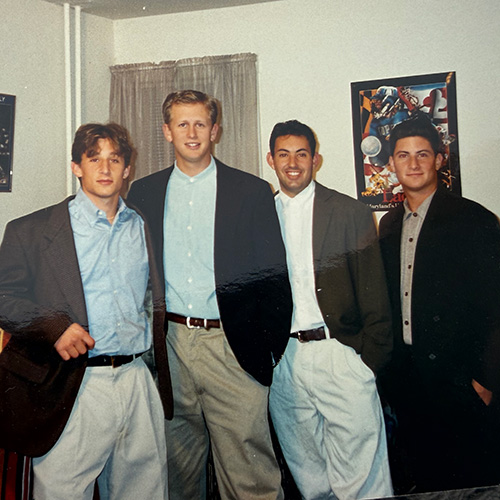
He pledged Phi Gamma Delta (FIJI) and sat on the Intrafraternity Council. He saw a gap in his pre-medical program and, again, in typical Lehigh fashion, developed a solution: Fiske created the pre-med observational program so students could shadow local physicians. For many of his peers, it was their first hospital exposure. He went on rounds and observed in the operating room and emergency room.
He studied abroad in London, where he completed science research on the endocrine system.
Throughout college, prior to going to medical school at New York University, he worked in an emergency department as an orderly, where he did many things: provide CPR during codes, help with medical transport, and lend a hand when needed.
Ironically, the first athletics injury he saw in the ER was a testicular trauma. It didn’t necessarily inspire his interest in urology. That happened later during his medical school rotation, where he saw the mix of patient care, surgery, and technology — lasers and robotics.
Fiske explains, “Urology offers a unique combination of surgery and medicine.” It is also a field that allows for a good work and family balance, letting him be at his kids’ games.
While his vasectomy cases can take on a lighter tone, the work itself is driven by excellent outcomes and commitment to patient safety. The tone in the office is professional, as other patients in the waiting room may be anxiously anticipating diagnostic tests, navigating a bladder cancer journey, hoping for positive fertility results, or enduring excruciating pain from kidney stones.
But that tone can shift as a man shuffles in for a vasectomy. Some patients pop in headphones and listen to music. Some talk ball.
One guy asked Fiske to turn on the afternoon Yankees playoff game. As the radio broadcast played, Fiske hoped for no big plays, no home runs or double plays, nothing cheer-worthy to make the man flinch while Fiske made his incision and snips.