
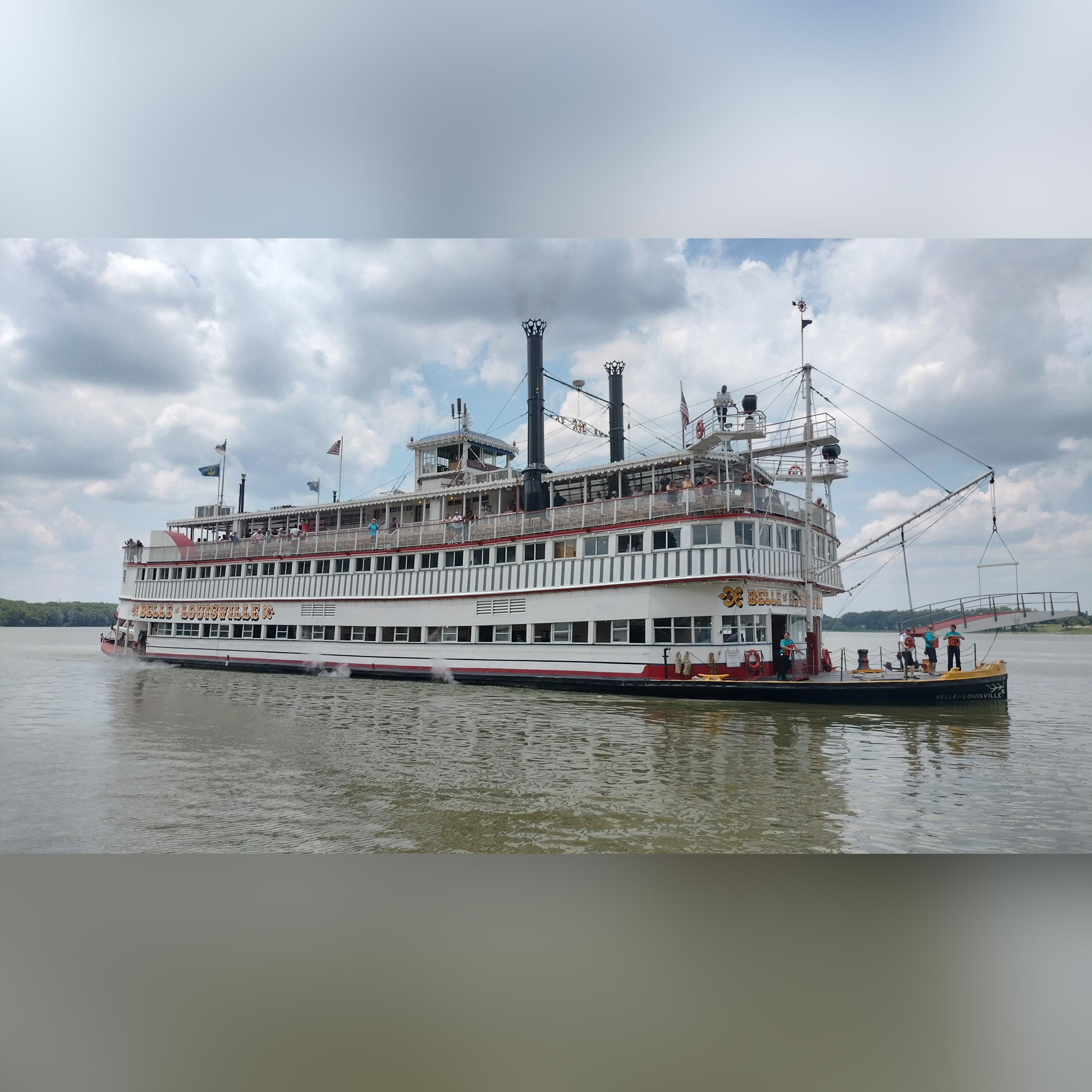
Water boils. Steam rises. Pistons push back and forth. A crankshaft transforms that energy into motion, the paddle wheels begin to turn, and the Belle of Louisville sets off on another voyage.
Built in Pittsburgh in 1914, the Belle is the oldest operating Mississippi River-style steamboat. As alternate chief engineer, Tom Coursen ’91 helps ensure that remarkable legacy continues.
For the lifelong history enthusiast, the job brings together his passion for the past with his engineering expertise. It’s also a career he never expected to find.
An Unexpected Course
Coursen was always fascinated by how things were built and the mechanics behind them, so earning a degree in civil engineering felt like a natural fit. After graduation, a friend connected him with a position as a field inspector in the water tower industry.
He spent his first year traveling to job sites before moving into the office, where he spent the next decade scaling, inspecting, and evaluating the structural condition of water towers.
He enjoyed the work, but eventually he began looking for another challenge.
Before long, he found himself in the engine room of the Belle of Louisville.
“It wasn’t the kind of engineering I’d studied, but I said, ‘OK, let’s give this a shot,’” says Coursen. “The idea of operating historic machinery was appealing to me, and everyone that works on the Belle takes pride in knowing that we’re contributing to and maintaining that history.”
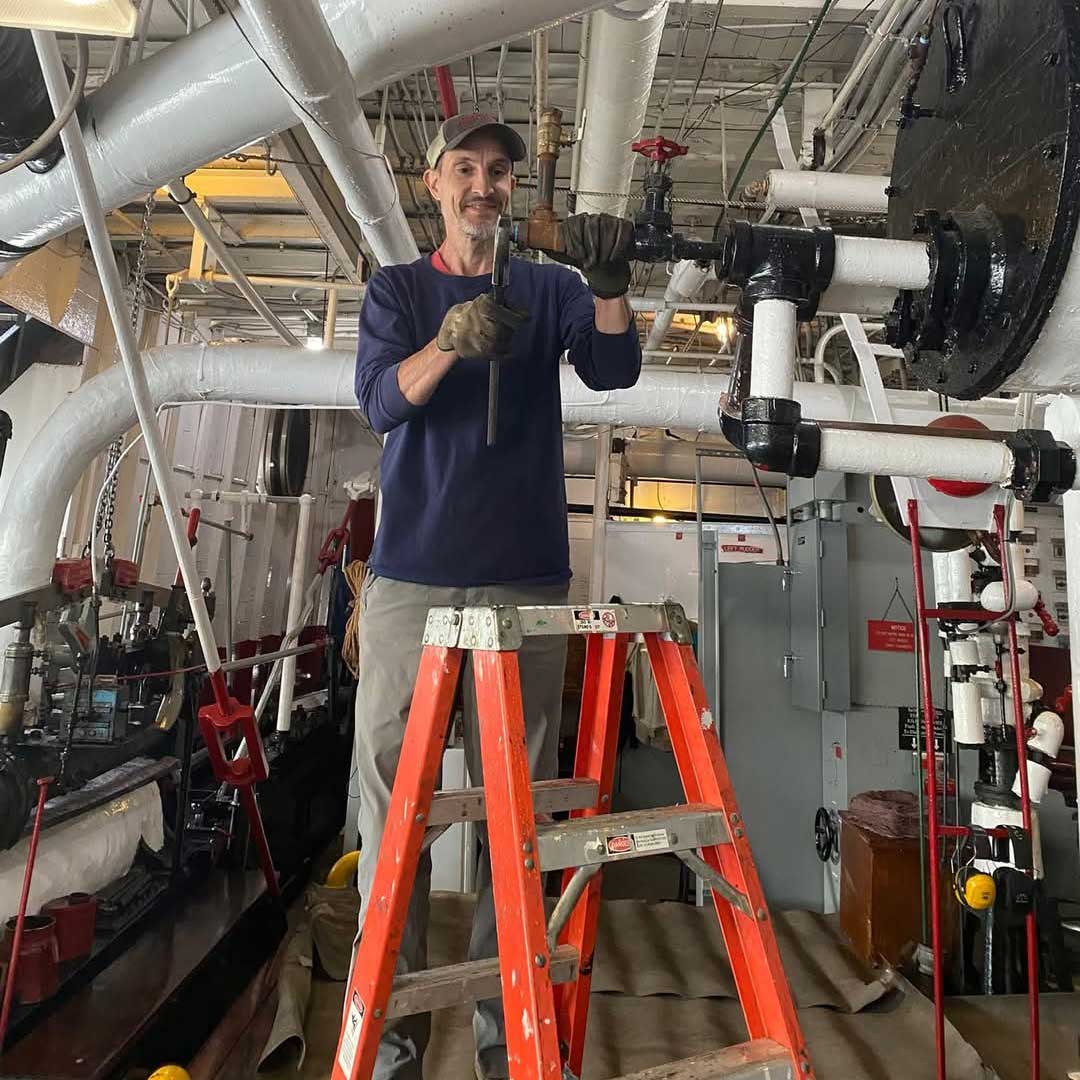
He started as a fireman and striker before earning both his designated duty engineer license and chief engineer license. More than 20 years later, Coursen is grateful he took the leap, and he still finds opportunities to learn with every season.
Keeping History Afloat
During the Belle’s busy summer season, he helps lead the engineering crew that keeps the steamboat running on its regular voyages along the Ohio River. When it’s the off-season, the crew turns its attention to maintenance. While some repairs are routine, others require partnering with machine shops to fabricate parts that haven’t been manufactured in decades.
“The Belle is a link to our past,” Coursen says. “The era this boat represents shaped westward expansion and economic development. It’s a living relic of that time.”
As one of only five authentic, fully operational steamboats remaining in the United States, the Belle of Louisville has become both a symbol of its city and a testament to American ingenuity. More than 100,000 passengers step aboard each year to experience a piece of living history.
“I always tell people our engine room looks a lot like what Mark Twain would have seen in Life on the Mississippi,” he says. “The communication between our pilot house and engine room is like what you saw in Titanic — we still use an engine order telegraph. Steering is controlled in the pilot house, but speeding and reversing are regulated by the engine room. Between the wind currents and changing river conditions, you have to stay focused.”
For Coursen, every voyage is an opportunity to preserve history through engineering.
For passengers, it’s a chance to experience that history firsthand.
And, if local legends are to be believed, they might even share the journey with a few of the Belle’s resident ghosts.