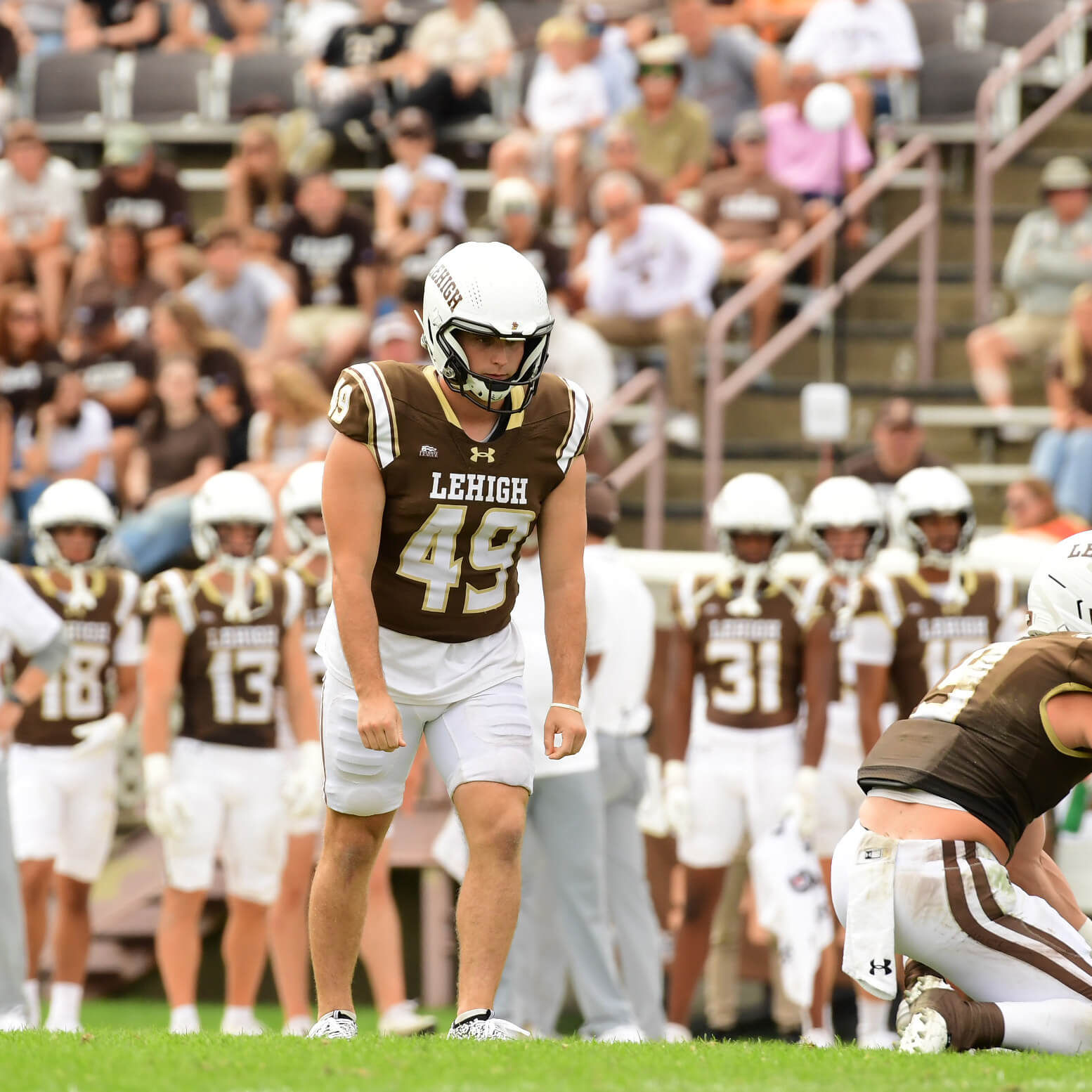
Nick Garrido ’26 immediately knew something was wrong.
During the last practice of the 2023 season, he was running during a field goal coverage drill when a teammate bumped his shoulder and threw him off balance. His right knee twisted, causing immense pain. Garrido couldn’t straighten his leg without the help of Marco Giuliani, the assistant athletic director for sports medicine.
“I was more worried about not being able to play in the game the next day, regardless of my knee health,” says Garrido, who was both a kicker and a punter.
He’d torn his right ACL, a devastating injury that requires surgery and a grueling recovery that can take up to 12 months.
“It’s a really difficult injury,” Giuliani says. “You’re facing something that requires surgery. At this level, you’ve also probably been a student-athlete all your life. Once that injury sidelines you, you get faced with an identity crisis. That mental health aspect is a really big deal.”
From Injury to Study Participant
Garrido’s injury made him a candidate for a study on ACL rehabilitation led by Dhruv Seshadri, an assistant professor in Lehigh’s department of bioengineering, involving the football team.
Seshadri leads the smart homes and smart spaces research pillar within the Center for Community-Driven Assistive Technologies (CDAT), one of Lehigh’s three University Research Centers. CDAT aims to improve people’s lives through interdisciplinary research and assistive technologies. For Seshadri, the study offered an opportunity to move research from the lab directly into an environment where it could affect human performance and rehabilitation.
He began working with the football team during the 2023 season to study whether wearable technology could provide additional, objective information as student-athletes recovered from ACL reconstruction surgery. He used a Moxy Muscle Oxygen Monitor, a wearable device that measures how much oxygen a person’s muscle uses (a measure known as muscle oxygen saturation), to track how Garrido and another injured player progressed throughout their rehabilitation.
The researchers wanted to know whether differences in muscle oxygen saturation between the injured and noninjured legs could provide additional information about how the athletes’ quadriceps were recovering. Seshadri’s hypothesis was that the quadriceps in the injured leg would use less oxygen because of muscle atrophy associated with the injury than the quadriceps in the noninjured leg.
Seshadri believes the objective measurements provide valuable feedback for athletic trainers such as Giuliani who help student-athletes recover from injuries.
The results showed that Garrido and his fellow study participant recovered at different rates, underscoring why Seshadri and his fellow researchers believe individualized data could be valuable. (The researchers cautioned in their study, which was published in the journal Biomedical Engineering Advances in November 2025, that two participants were too few to establish universal benchmarks.)
“We were able to get a sense of what they’re feeling and turn it into visible data,” Giuliani says. “They were able to see, ‘Here’s your [noninjured] side [results], here’s your [injured] side [results]. Look how close those two lines are. You’re doing really, really well.’”
Making Progress Visible
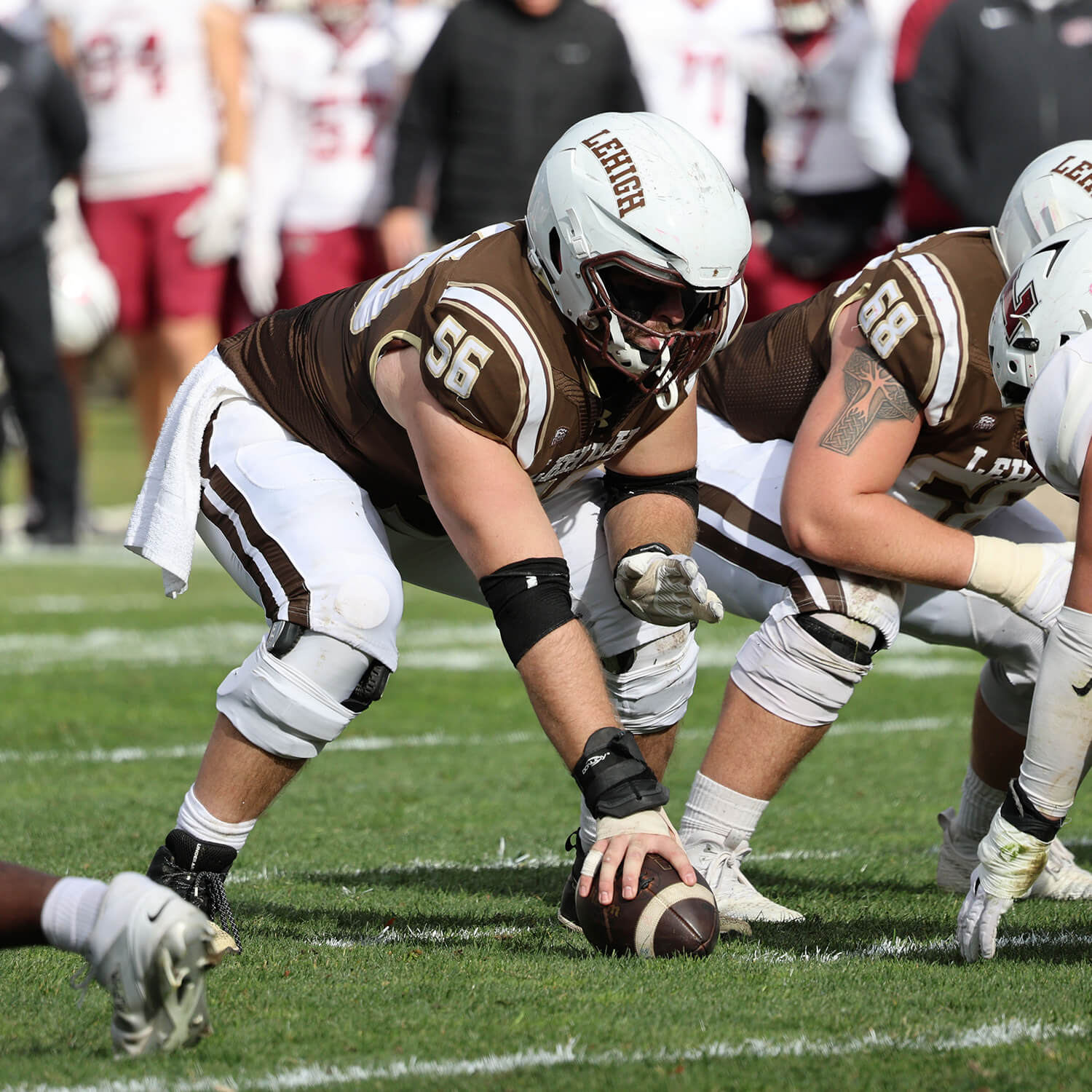
After tearing his left ACL in the first game of the 2023 season, George Padezanin ’25 recalls wondering why the injury happened to him, especially as he watched his teammates finish the season. His rehabilitation involved repeatedly performing basic exercises, such as tightening his quadriceps and lifting his leg, to rebuild his strength.
“The hardest thing is just to be consistent with your rehab every day,” says Padezanin, who was an offensive lineman.
The two athletes wore the Moxy sensor — which is about the size of an AirPods case — on their quadriceps while performing rehabilitation exercises. The researchers measured muscle oxygen saturation in the injured and noninjured legs at several points throughout the process.
One benefit for Padezanin and Garrido was being able to see their progress.
“When they convert their charts to English, you’re able to see the comparison between the two legs,” Padezanin says.
For Garrido, seeing what was happening inside his leg made the long recovery easier to trust.
“It helped more mentally than anything,” he says. “Being able to know that everything on the inside is working properly was a huge help for me because that just gave me way more trust in what we were doing.”
Research in the Field
For Seshadri, the project demonstrates what can happen when Lehigh Athletics and researchers work side by side. His group collaborates with more than 250 Lehigh student-athletes, some of whom work in the research labs before heading to their own practices.
“That’s what makes Lehigh really special,” Seshadri says.
He says that proximity allows engineers, athletic trainers, coaches, and student-athletes to test and evaluate technologies together, giving researchers direct feedback from the people who could ultimately use them.
Padezanin and Garrido returned for the 2024 season, helping Lehigh beat Lafayette College in Rivalry 160, win the Patriot League Championship, and earn the team’s first automatic bid to the Football Championship Subdivision (FCS) playoffs in seven years.
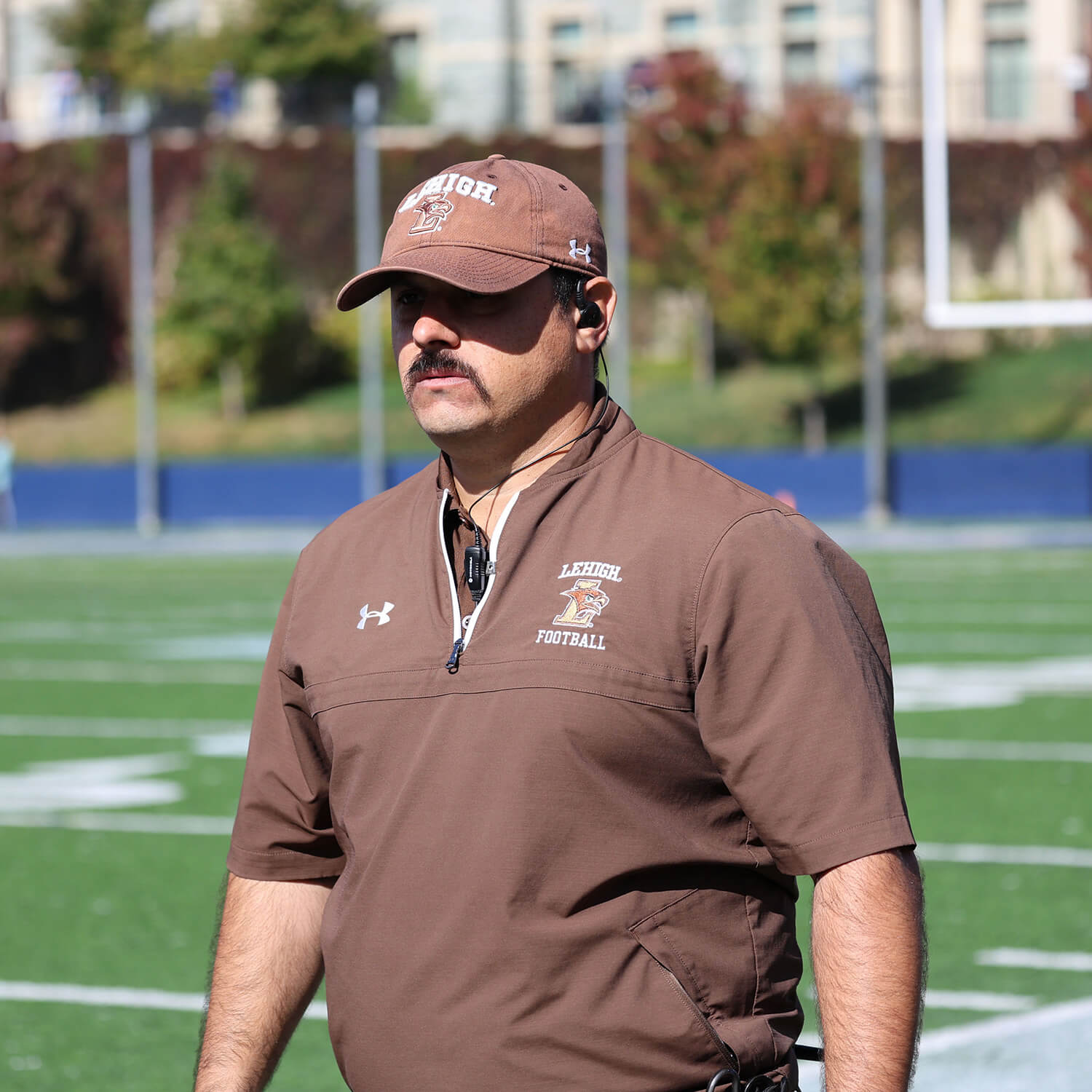
Garrido played again as a senior in 2025, a season in which the Mountain Hawks would earn another Rivalry win, yet another Patriot League Championship, and another FCS playoff appearance.
Garrido's season ended early, however, when he tore the ACL in his left knee during the ninth game.
This time, though, he knew something he hadn’t known when he was lying on the practice field two years earlier: He could come back.
“I was heartbroken that my season ended,” Garrido says. “But knowing everything that we did through Marco, through this study, through everything that went on with my first one, I was happy to know that I could get back to normal soon. It was huge for my mental health.”