
The transition to a lower-carbon future is reshaping industries worldwide. Often called the climate economy, this ever-evolving sector blends technological innovation, business strategy, and systems thinking to address climate change while redefining how economies function.
Lehigh alumni are helping lead that transformation. Their careers span different industries, yet each reflects a shared goal: building practical solutions capable of delivering lasting environmental and economic impact.
Meet the Alumni
Joseph Paluska MBA’91 | Sarah Woogen ’13 | Nicole Ganot ’06 | Nishad Pai ’93
Joseph Paluska MBA’91
Reimagining energy’s future

Paluska has watched the United States lose ground in emerging climate industries before.
Earlier waves of investment allowed other countries to dominate sectors such as solar, wind, batteries, and electric vehicles. Now, as chief marketing officer at Commonwealth Fusion Systems, Paluska believes fusion energy represents another pivotal moment and another race the U.S. cannot afford to lose.
“We had this opportunity 20 years ago, and the United States missed it,” he says. “We’ve kind of seen this movie before, and we want to change the ending.”
Fusion, the same process that powers the sun and stars, has long been viewed as a potential source of clean, virtually limitless energy. At Commonwealth Fusion Systems, the world’s largest commercial fusion company, Paluska helps shape public understanding of a technology moving from scientific ambition toward commercial reality.
“It’s kind of ironic,” he says. “The stars have been powered by fusion for billions of years. But here on Earth, we don’t have fusion yet.”
The company’s demonstration machine, SPARC, is expected to come online in 2027 with the goal of proving it can generate more power than it consumes, a milestone scientists have pursued for decades. A grid-scale fusion power plant could follow in the 2030s.
“There’s a myth that fusion is always 30 years away,” Paluska says. “But transformative technologies often appear suddenly after years of work by entrepreneurs, scientists, and engineers.”
Paluska credits Lehigh’s MBA program with helping him become more comfortable collaborating and communicating in team environments, skills he continues to rely on as an introvert working in a highly public-facing role within climate technology.
Sarah Woogen ’13
Building flexibility into the electric grid

If fusion represents the future of energy generation, Woogen focuses on how electricity is managed and delivered today.
Rolling blackouts in states such as California and Texas reshaped how she viewed the electric grid, exposing vulnerabilities while highlighting opportunities for innovation.
Now vice president of product and delivery for North America EV charging and energy management at The Mobility House, Woogen works on vehicle-to-grid systems that allow electric vehicle batteries to send stored energy back to the grid during periods of peak demand.
“To me, building the climate economy means creating scalable technology that can stand on its own business case,” Woogen says. “Solutions need to work not just environmentally, but economically. That’s what drives adoption.”
She says one of the biggest misconceptions surrounding electrification is the belief that the grid cannot support widespread EV adoption.
“It can, with the right technology and program design,” she says. “The real challenge is managing when energy is used.”
Although Woogen’s environmental interests began when she was a child, her focus on energy systems developed through Lehigh’s IDEAS program, where she explored technical, ethical, and design perspectives simultaneously.
Her advice to students entering the field reflects the pace of change within climate industries: remain adaptable.
Nicole Ganot ’06
Designing sustainability into consumption

The climate economy extends beyond energy systems into the everyday products people buy and use.
For Ganot, sustainability begins with rethinking how goods move through the marketplace. As vice president of operations strategy at The RealReal, she oversees logistics, operations, and data systems that support luxury resale at scale.
Each day, thousands of handbags, shoes, pieces of jewelry, and returns move through systems designed to extend product life cycles and reduce waste.
“In industries like apparel, we’ve operated for decades on a linear model: take, make, waste,” Ganot says. “Building a climate-aligned economy means shifting that into something far more durable.”
Her work focuses on embedding reuse directly into business operations, ensuring sustainability initiatives are practical as well as environmentally meaningful.
“If these systems don’t work economically, they don’t scale,” she says. “And if they don’t scale, they don’t matter.”
Ganot credits Lehigh's interdisciplinary culture with teaching her how to approach complex challenges from multiple perspectives and connect ideas across different fields.
“Sustainability doesn’t live in one function,” she says. “It sits at the intersection of business, operations, and human behavior. Lehigh trained me to be comfortable connecting those dots.”
Nishad Pai ’93 '26P
Aligning climate solutions with market forces
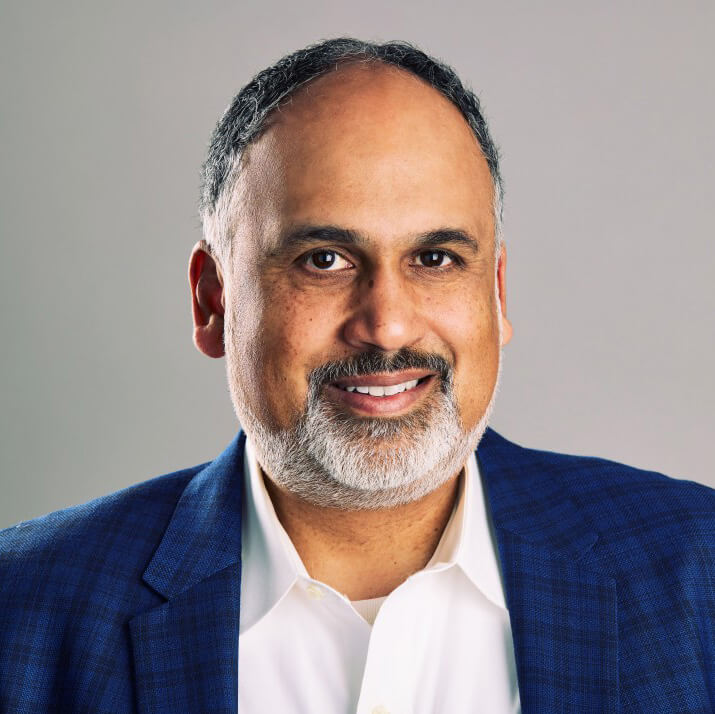
After 25 years working in technology and media, Pai began thinking more deeply about the world future generations would inherit. That reflection led him into climate technology.
As chief commercial officer at Arbor Energy, Pai works on clean energy systems designed to meet rapidly growing electricity demand from AI data centers and industrial operations, sectors expected to play a major role in future emissions.
“One misconception people have about climate markets is that the driving force is exclusively altruism,” Pai says. “Most climate technology companies are for-profit organizations commercializing solutions to meet real market demand.”
He argues that businesses often underestimate the economic risks associated with greenhouse gas emissions.
“The economic impact of climate change is in the trillions of dollars,” Pai says. “We’re already seeing it in insurance markets, where home and auto premiums are rising due to more frequent extreme weather events. Insurance losses from natural disasters exceeded $100 billion in 2025 alone.”
Pai hopes organizations will increasingly recognize that environmental responsibility and economic competitiveness are not opposing goals.
He encourages students and professionals alike to enter the field, even without prior expertise.
“In the course of human history, there is no shortage of ingenuity when it is most needed,” Pai says. “We need as many smart minds as possible working on this existential problem.”