
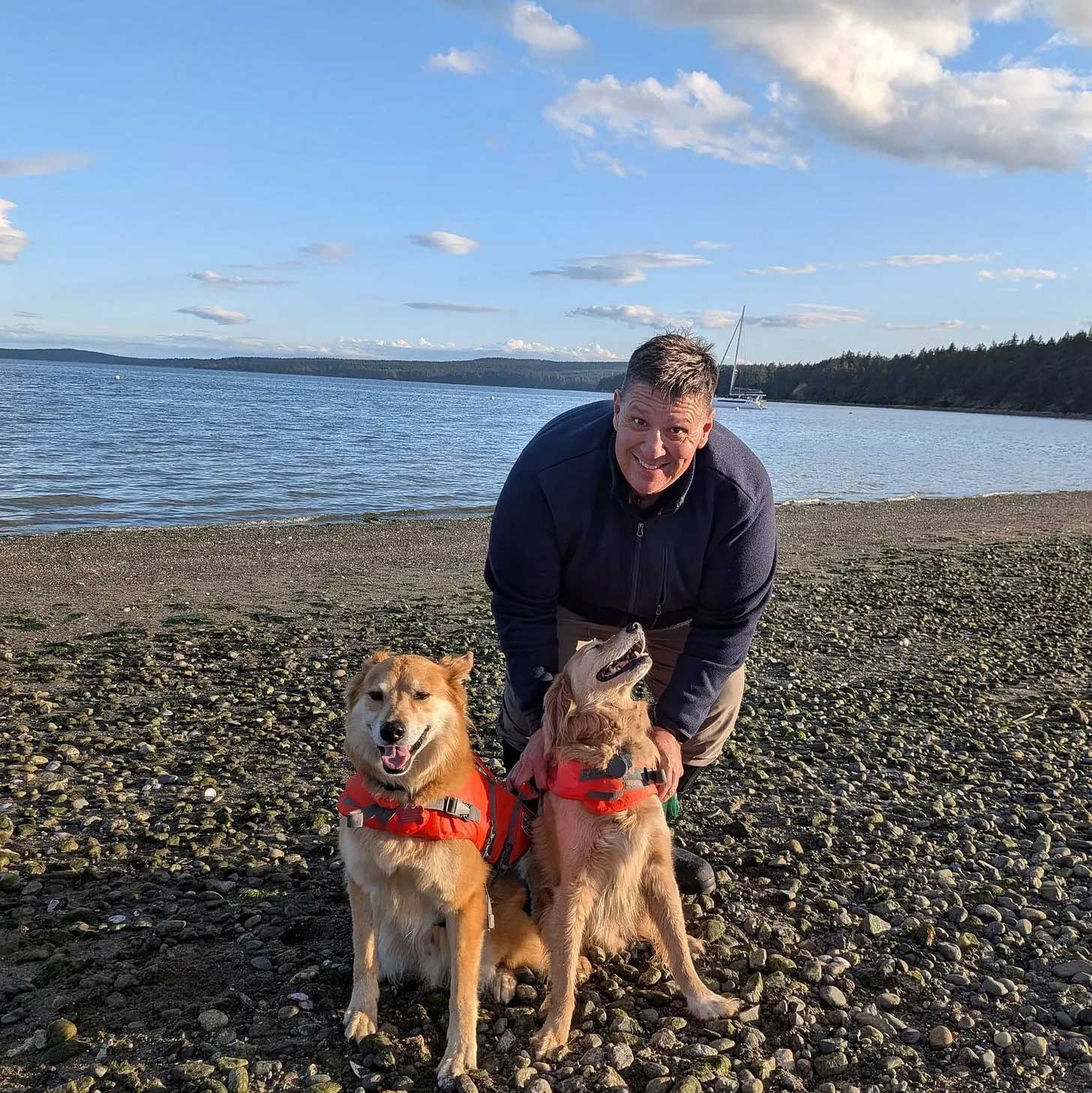
No man is an island. While Mark Long ’87 intends to see plenty of them, he’s learned that life is better when you don’t sail it alone.
After 100 days sailing from Seattle, Washington, to southeast Alaska and back, Long returned without a concrete answer to what comes next, and he’s stopped expecting one.
“I don't know that I know what my purpose is,” he says. “This is one step in a new chapter — trying different things, saying why not, taking chances, and bringing people along.”
Learning the Ropes
Growing up in central Pennsylvania, Long spent family vacations camping, hiking, and sailing aboard a small 14-foot sailboat. Years later, after moving to California for graduate school, he and his roommate, James Dryfoos ’87, talked their way into Stanford's intermediate sailing class. The varsity sailing coach told them the best way to learn was through racing. They took the advice and quickly became hooked.
He took more classes, got into more serious sailboat racing, and began chartering, first locally and then in remote parts of the world. For Long, it became far more than just a passing interest. He’s been sailing ever since.
That same willingness to challenge himself shaped his engineering career. He worked at NASA’s Jet Propulsion Laboratory, led engineering at two early-stage startups, became a senior platform leader at Amazon Logistics, built the innovation team at a large health system, and served as chief technology officer at Zynx Health and three other companies. At Zynx, he and his team launched the first AI product to help keep clinical evidence current, earning him CTO of the year from the Los Angeles Business Journal in 2012. When asked about his proudest professional accomplishment, Long doesn't single out the technical work, though there's plenty of it to highlight. Instead, he points to people.
"There are a handful whose potential I spotted and fostered," he says. "Sometimes it wasn't apparent, not even to the people themselves. It's a joy to watch their evolution. It’s a different form of seeing possibilities."
“I’m genetically wired to be an engineer, and not just because my father was a Lehigh engineer,” he says. “I could be sitting in a city bus and staring at the driver’s seat wondering why it was designed that way and how it could be better. I’ve always been one to challenge convention, and that led me to grad school, to NASA, and to a career built on seeing possibilities other people didn't. I was always asking what assumptions were holding us back.”
Finding His Bearings
His career was constantly moving forward, but sailing gave him a different kind of space. It allowed him to slow down, look around, and be present.
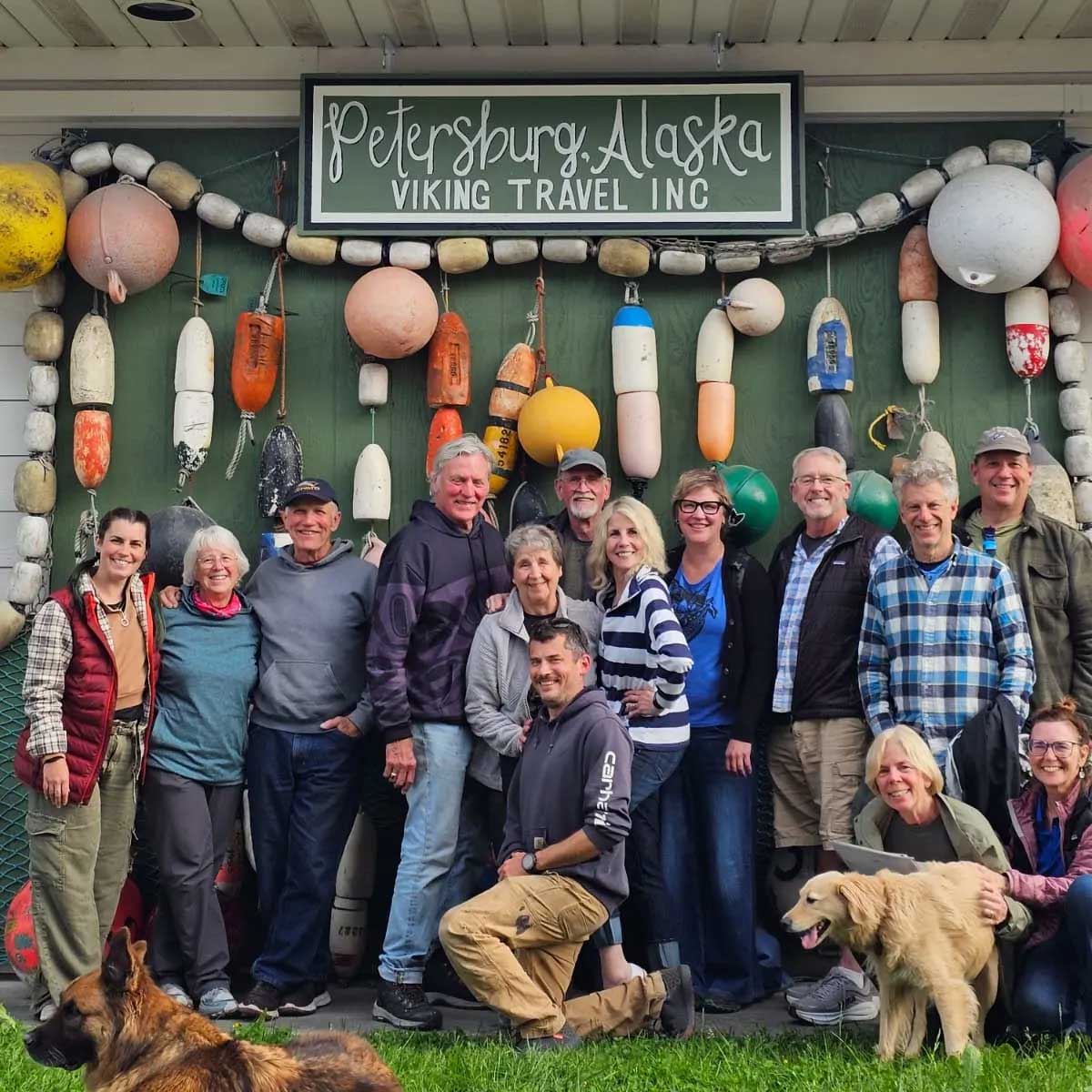
Now mostly retired, Long is spending more time on the water. But the boat is a vehicle, not a destination. His 100-day journey was partly a way to challenge himself, and what he discovered along the way went well beyond the sailing itself. Evenings were spent sharing meals with people aboard the other boats, swapping stories and favorite anchorages, and building meaningful friendships.
"I want to rediscover who I am," Long says. "My whole life has been defined by my job and my identity as the tech guy, engineer, CTO. I spent my career looking for possibilities in systems and in people. Now I'm turning that same eye on myself. Part of the trip to remote Alaska was to put myself in a new situation, push my comfort zone, and take one step forward into what's next."
It's a strange kind of work for a mind that doesn't sit still easily.
"I catch myself doing it out here too," Long says. "Researching tides and currents, planning the next passage, adding to the boat projects list, turning a quiet evening into what I've started calling 'artificial busyness' — projects and to-dos that feel important but really aren't; just a byproduct of a restless mind. Learning to sit with it instead isn’t a skill I ever had to build, but I am now. Some evenings I still lose. I sit down to just be still and, an hour later, I'm researching new boat gadgets."
Some of the most meaningful connections were also some of the most unexpected. Two guests were old classmates from California Institute of Technology whom Long hadn’t seen in years. They ended up spending nine days together, talking almost nonstop, and connecting in a way they never had before.
“One of the wonderful surprises was how many people decided to join for part of the adventure. When I first hatched the idea, I didn’t know if I’d be on the boat with just my dog for most of the trip. It turned out that there was only one week where I was by myself.”
Into Uncharted Waters
For Long, those encounters reinforced one of the lessons of his journey: You can’t always know where a path will lead you until you’re willing to follow it.
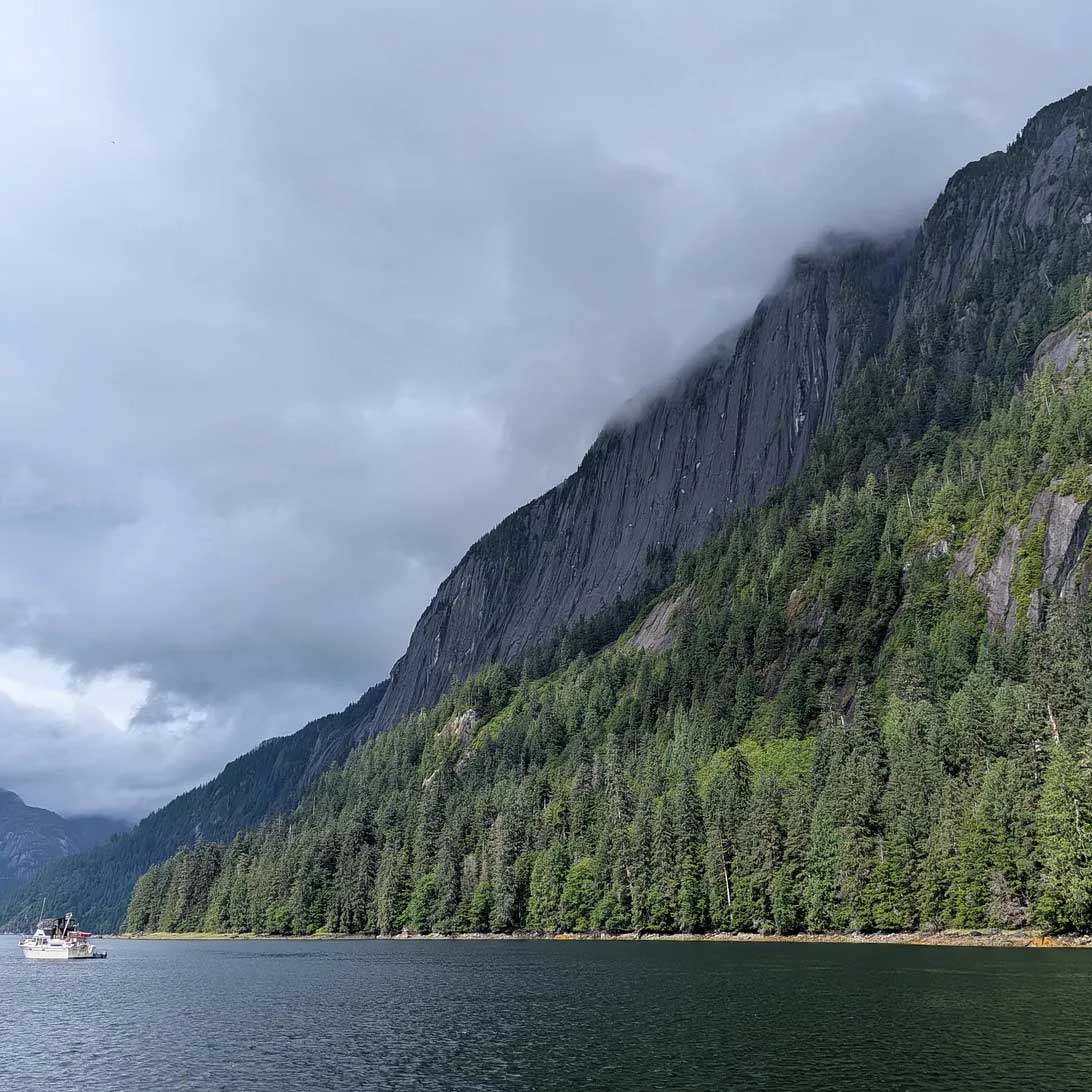
“After meeting all these people, I realized what’s next is unknowable until you get there,” Long says. “You need to trust yourself. My life took so many turns that I never imagined. Now, I have to try new things and experiment. The feeling isn’t that far off from being a fresh graduate at 22 years old, entering the unknown.”
Sometimes you have to ask yourself “why not?” he says.
He hasn’t stepped completely away from his professional life. Long still does the occasional consulting and mentoring, and he serves on the Dean’s Advisory Council for the College of Health, where he brings the same curiosity and unconventional thinking that guided his career.
“The College of Health runs almost like a startup,” he says. “It’s offering undergraduate majors that aren’t common, like population and community health, and health data science. It’s similar to when a tech startup is introducing a product that hasn’t existed in the market before. You don’t have primary demand to propel you forward; you need to create it, and that involves a lot of experimentation. I hope that perspective is helpful to the College of Health.”
For now, though, much of his attention is on the water and his own next experiment.