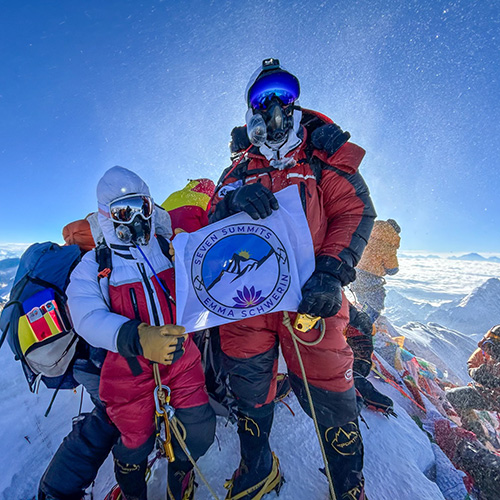
Sam Schwerin ’94 stood atop Mount Everest alongside his 17-year-old daughter, Emma, on May 15, 2025. At 29,032 feet, the summit marked historic achievements.
For Emma, it meant becoming the youngest woman in the world to complete all Seven Summits and the youngest American to reach the world’s highest peak.
For Schwerin, the achievement was about more than his success, Emma’s accomplishments, or their two-year pursuit of the goal. It was about inspiring others.
You can do hard things. Harder things than you ever thought possible. No matter what others might say or what the critical voice inside your own head tells you, Schwerin wants you to climb whatever mountain you’re facing.
Conquering that mountain means setting audacious goals, understanding the requirements, mitigating the risks, knowing your why, and taking it one step at a time.
A relatively ordinary guy who climbed Mount Everest, Schwerin has also beaten cancer, earned his pilot’s license, run successful businesses, and helped each of his children set world records.
For him, there are no bucket lists. Instead, every day is a chance to fill the bucket.
That’s why he jokes with his family that his tombstone will read, “Believed he could do anything, and was almost right.”
This philosophy took clear shape during his years at Lehigh.
Lehigh Days
In seventh grade, Schwerin read a story in the Wall Street Journal about finding success in investment banking that outlined mandatory milemarkers, including a job at Salomon Brothers and an MBA from Wharton School of Business. He used that story to set a goal.
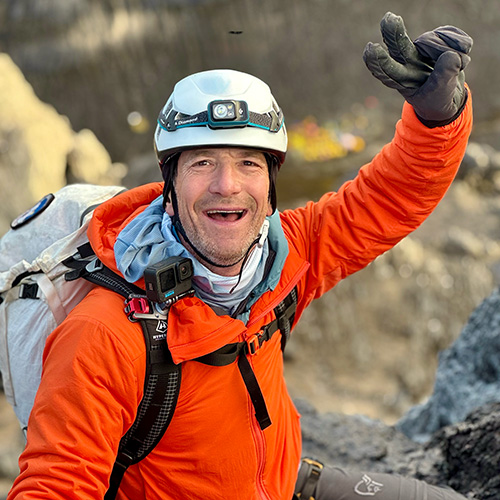
As one of seven siblings growing up in rural Washington state, Schwerin knew the goal was ambitious. But his mother had instilled in him a piece of advice from her career in psychiatric nursing that he never forgot: You can do anything — it’s all in your mind.
His mindset was tested at Lehigh after an academically challenging first semester. Rather than get knocked down, he doubled down, telling himself he would graduate near the top of his class. He did.
“I think the world of the school,” he says. “It was the absolutely best place for me. Lehigh taught me that being challenged isn’t a sign that you’re in the wrong place. Sometimes it’s exactly what you need to discover what you’re capable of.”
He traded options in Prof. James Greenleaf ’66G ’93P’s class, where Schwerin developed an approach designed to capture the upside of an opportunity while navigating uncertainties — something that would become central to his professional life and personal accomplishments.
He played club rugby for the better part of four years, was elected to the Forum, and was active in the investment club. He and his father, Stuart Schwerin ’57, part of a three-generation Lehigh family that included Albert Schwerin ’29, sat in the stands and cheered on Lehigh football.
After commencement, he began working at Salomon Brothers. The projects were demanding and the hours long. To help clear his head, he started flying lessons. Soon, he had earned his pilot’s license.
After three years, he went to Wharton to earn his MBA, where met his wife, Sara. He then worked at Blackstone Group. Eventually, he ventured out on his own, co-founding a number of venture-backed tech companies and a venture capital firm, Millennium Technology Value Partners, that backed Meta, Twitter, Spotify, Alibaba, and more than 70 companies that would either be acquired or go public.
Aviation came in handy when he and Sara settled their family in Montana. To Schwerin, “geographic arbitrage” meant he could think and strategize in Big Sky Country, then fly to New York and California to execute on ideas.
First World Record
The love of flight rubbed off on their children, who have been flying in small planes with their parents since birth. Both aspired to be pilots. Schwerin’s son, Joshua, completed his first solo flight at age 16, within a few weeks of earning his drivers license.
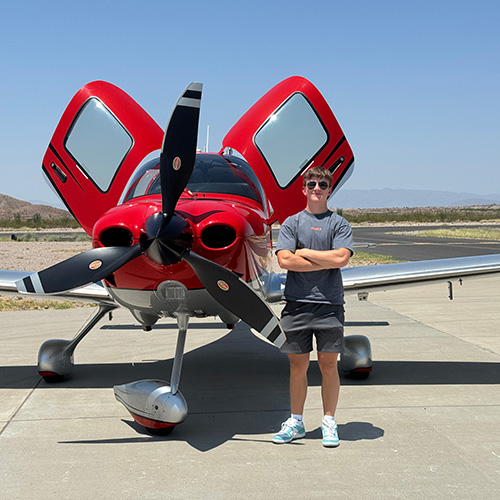
As he became more involved in flight training, Joshua learned about the shortage of aviation mechanics, the high cost of learning the trade, and the single $500 scholarship for aviation mechanics at Helena College, the only FAA-approved program in Montana.
He decided to do something about it. He would raise enough money to fund meaningful scholarships covering tuition and the required tools. Rather than simply ask for donations, Joshua decided to undertake a challenge that would draw attention to the issue and inspire others.
At 17, he earned his pilot’s license, and about a month later, he became the youngest person to circumnavigate the United States by plane.
It took 65 flight hours, with Joshua flying just outside the country’s borders. Canadian and Mexican air traffic controllers were fascinated by the journey. U.S. military bases on the Atlantic and Pacific coasts were less excited.
Still, he set the Guinness record, raised tens of thousands of dollars, and has awarded three scholarships to date.
“Sara and I have always believed in encouraging our children to pursue ambitious goals,” says Schwerin. “We want them to dream big, be thoughtful, and never be afraid to attempt something difficult. You don’t really know what you’re capable of until you try.”
Second World Record
At age 14, Emma was looking for a challenge. She had been reading books about a mountaineering tragedy on Mount Everest and asked her dad if he would ever consider climbing Everest with her. Despite knowing nothing about mountaineering, his answer was obvious.
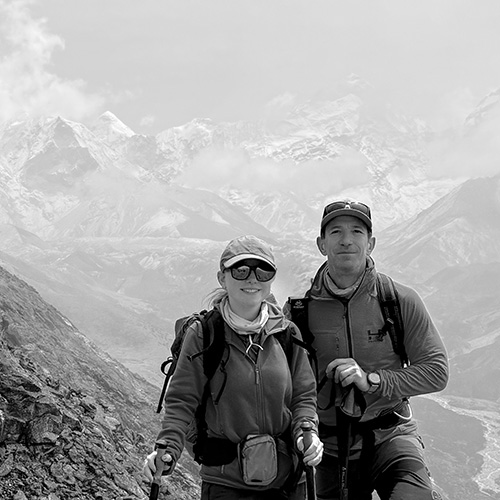
The next day, they booked a trip that would see Emma, Sara, and Sam trek more than 100 miles roundtrip to Everest’s 18,000-foot basecamp. The guide on that journey asked Emma whether she had considered pursuing the Seven Summits record – climbing the tallest mountain on each of the seven continents.
At 4 feet 11 inches tall and 100 pounds at the time, Emma faced an extraordinary challenge. But she thought her success could inspire others to conquer their own Everest.
To support her, Schwerin turned to experts for advice. They taught the pair new skills, helped them adjust their diets, and guided their preparation for intense altitude. Schwerin and Emma read, studied, and trained continuously for two and a half years. He affectionately called it his “sufferfest.”
There was only one path forward that would allow them to complete all seven summits while accommodating his work, her school, the seasons, mountain availability, trekking logistics, and capable guides. One failure could derail the entire plan.
Over the course of their expeditions, father and daughter spent more than 120 nights in tents at high elevations and in uncomfortable conditions — an extraordinary amount of time together, which never felt like suffering.
They summited Mount Kosciuszko in Australia on November 22, 2023; Kilimanjaro in Africa on January 5, 2024; Denali in North America on June 24, 2024; Mont Blanc in Europe on July 26, 2024; Aconcagua in South America on December 9, 2024; Mount Vinson in Antarctica on December 23, 2024; and Mount Everest in Asia on May 15, 2025.
“If you asked me at Lehigh whether I would climb Everest, my answer would have been 100% no,” he says. “But now, I truly know that we are capable of achieving anything — more than we ever think we can. Every day can be a step forward in that discovery.”
When he returned from Everest, he could barely walk, had lost 15 pounds, and had frostbite on his face. But with his “sufferfest” complete, his normally regimented calendar was suddenly wide open.
So he did what any ordinary person would do … say yes to everything.
His coach asked him to run a 24-mile trail race. Sure. A buddy asked him to run a marathon two weeks later. OK. A fellow mountaineer suggested they climb Carstensz Pyramid, the highest mountain in Oceania. Done.
Facing Cancer
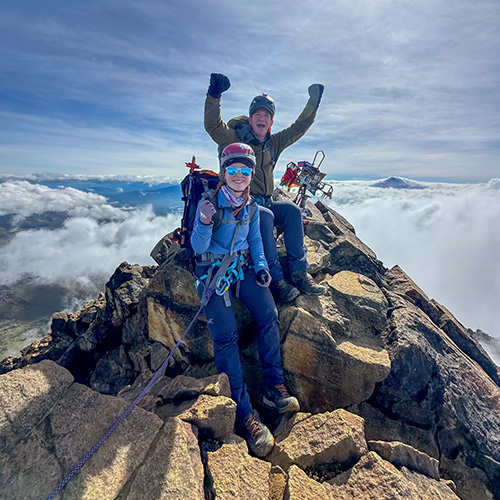
The next challenge was one he didn’t choose. Less than six months after standing on top of the world, Schwerin was diagnosed with cancer.
“When life puts a challenge in front of us, we can choose how we respond,” he says.
Six days after cancer surgery, Schwerin completed a half-marathon. Four days later, he climbed a local mountain. He hasn’t stopped yet.
“It became a year of saying yes,” he says. “Life’s unexpected challenges need not define the limits of what comes next.”
He has continued to climb. His son joined him on an expedition in Russia over the summer, where they summited Mount Elbrus, the country’s highest mountain. He has a 100-kilometer race penciled in on his calendar.
His kids gave him a nameplate for his desk. Instead of his name or title, it holds a simple phrase: “do epic sh*t.”
“Everyone has an Everest,” he says. “Overcoming an illness, opening a business, raising a family … No matter what it is, never underestimate what you’re capable of accomplishing.”