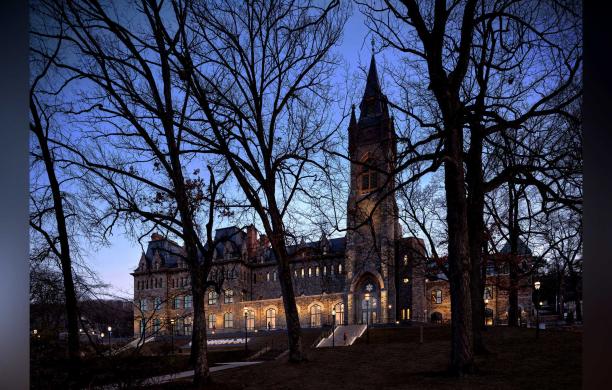
When a campus has stood for more than 160 years, it’s bound to collect a few stories along the way. Some are rooted in documented history; others have been passed from student to student until fact and fiction become difficult to distinguish. From underground tunnels that may have sheltered students to a mysterious forest hiding in plain sight, Lehigh’s lore has no shortage of intrigue.
We went digging into some of campus’s most enduring tales to find out which ones hold up to scrutiny, which remain up in the air, and which might be more legend than fact.
The Myths
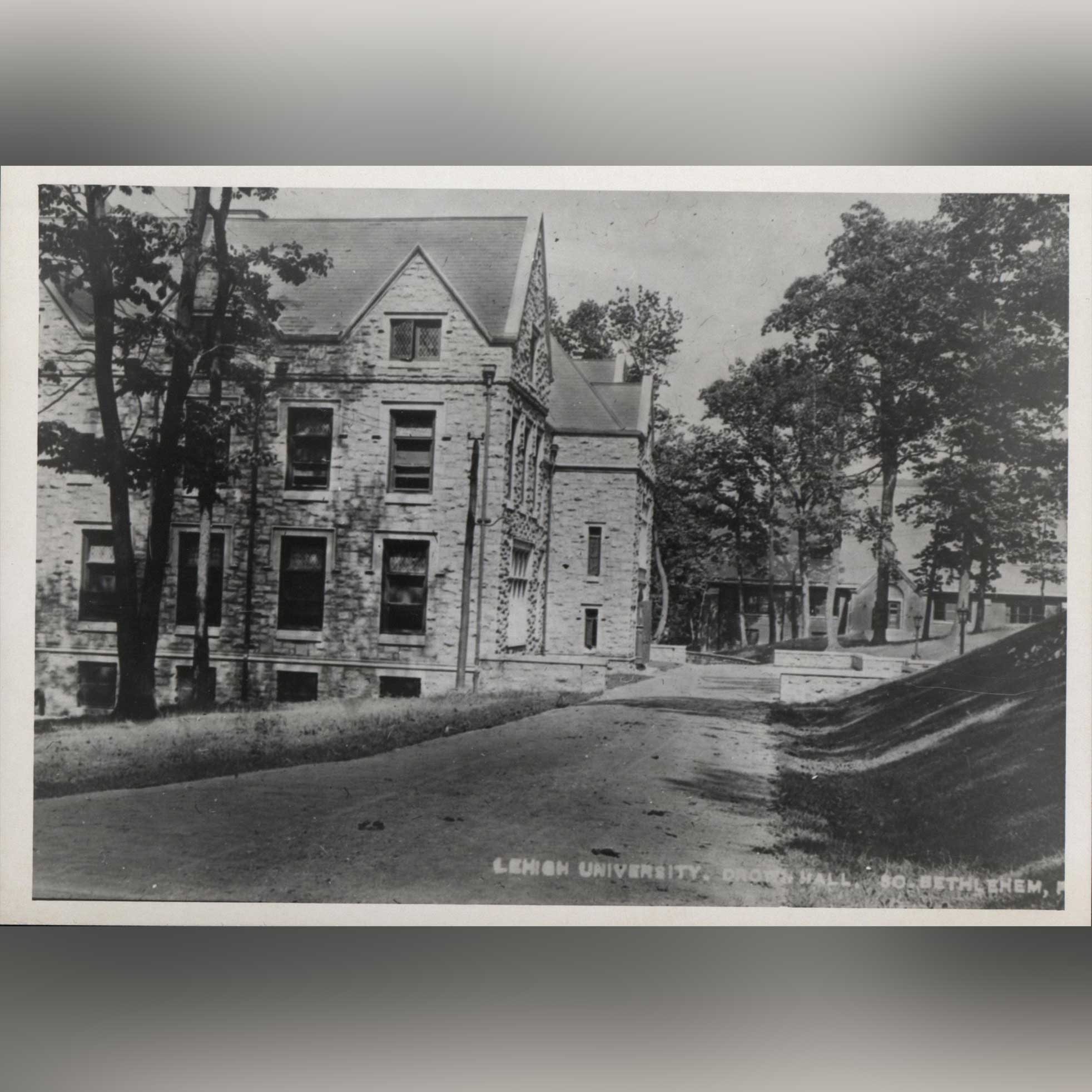
Drown Hall was a makeshift hospital during the 1918 Spanish Flu pandemic.
Verdict: Fact
A global pandemic, an overwhelmed health care system, and a campus forced to adapt to an unprecedented crisis. It may sound familiar, but this chapter of Lehigh’s history dates back more than a century.
In 1918, as the Spanish influenza spread across the country, the university was placed under quarantine, with armed guards stationed around its grounds. The outbreak coincided with World War I and the presence of the Student Army Training Corps at Lehigh. When St. Luke’s Hospital became overcrowded, Drown Hall was taken over by the Army and converted into a hospital for students.
Today, Drown Hall is a familiar campus landmark with a remarkable history. More than a century later, the story serves as a reminder of how communities adapt and come together in times of crisis.
Lehigh’s 8:10 a.m. classes were scheduled around students who also worked at Bethlehem Steel.
Verdict: Myth
Why start classes at 8:10 a.m. instead of on the hour or half-hour? One popular explanation is that students once worked at Bethlehem Steel and needed 10 minutes to travel from the facility to campus.
It’s a neat theory, especially given Lehigh’s close ties to the industrial history of the surrounding area, but the explanation doesn’t hold up.
According to page 48 of The Epitome’s 2014 account of university history, the unusual start time traces back to an earlier campus routine: mandatory chapel attendance. In Lehigh’s early years, chapel began at 7:30 a.m. and ended at 8 a.m., leaving students 10 minutes to get to their first class.
In other words, the time wasn’t set around a shift at the steelworks, but rather as a buffer between a morning religious service and the academic day.
Students once lived in the underground tunnels beneath campus.
Verdict: Unconfirmed
Every campus has its shortcuts, secret passages, and rumored hiding places. Ours has underground tunnels, making this particular story all the more tempting to believe.
Beneath the familiar walkways and buildings lies another layer of campus, a network of underground tunnels that most students will never see. According to campus lore, during the 1950s and ’60s, some students who couldn’t afford housing found an unconventional alternative by living in the tunnels beneath campus. The story conjures images of makeshift quarters tucked away from view, with students emerging each morning to make it to class.
Although the tunnels are real, there’s no evidence that students actually called them home.
Could the story have grown out of the tunnels’ existence, or is there a missing chapter of university history waiting to be uncovered? For now, the tale remains unverified. But if anyone has a firsthand account, or knows someone who does, we’d be interested to hear it.
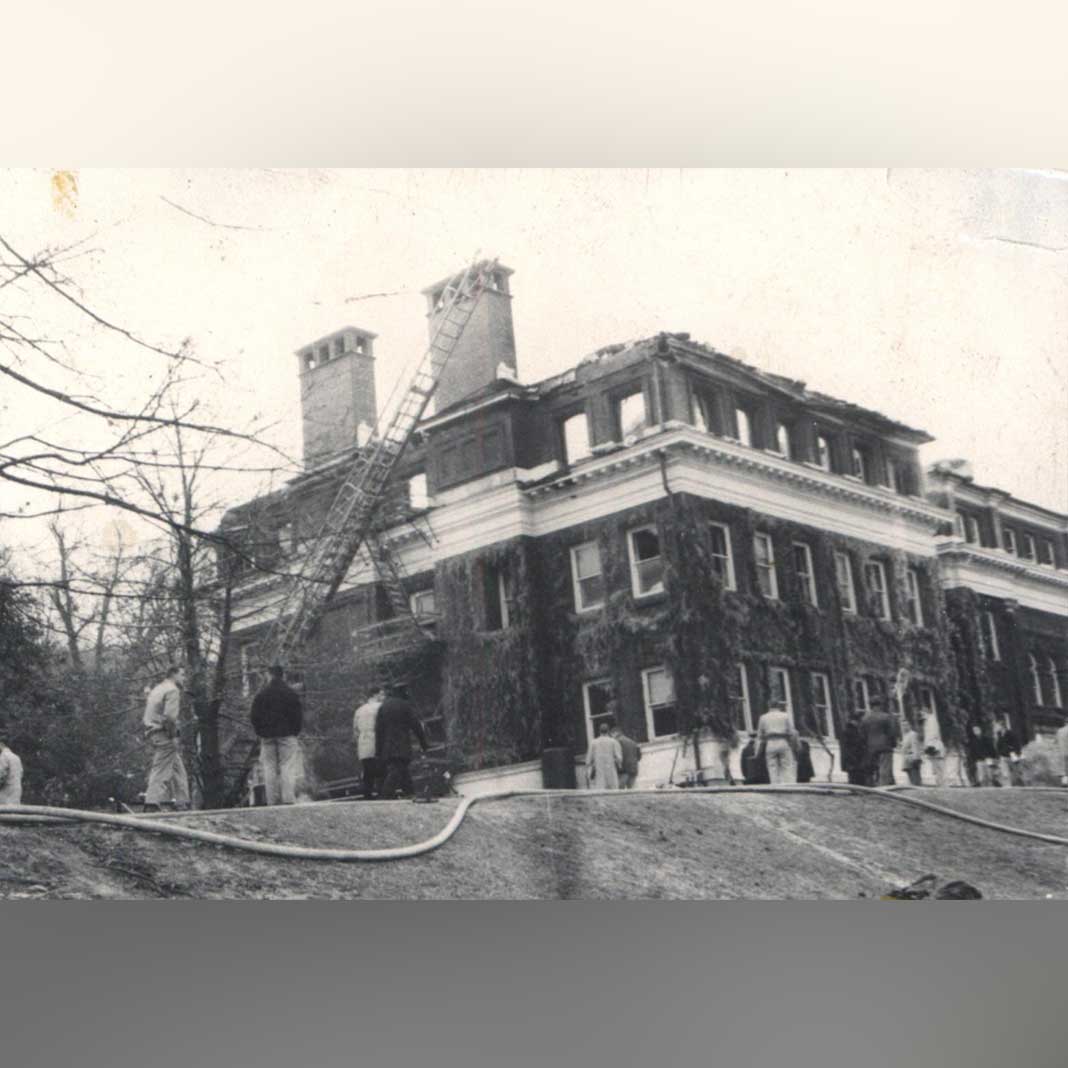
An experiment gone wrong caused a fire that left a patchwork of bricks in Williams Hall.
Verdict: Partly true, but the mystery remains.
In Williams Hall, differently colored bricks mark a spot that has inspired its own explanation. The rumor is that an experiment left running overnight sparked a fire that damaged the floor.
The fire did happen in 1956. What remains unclear is exactly what caused it or why the bricks were replaced by different-colored ones.
A late-night lab experiment, an unexpected blaze, and a permanent reminder embedded in the building: It’s a compelling story. But without a confirmed explanation for the fire or the patchwork of bricks, the connection remains unproven.
A hidden grove of rare trees is tucked away in South Mountain’s new Forest Park.
Verdict: Fact — but forgotten for decades
Of all the stories circulating around campus, this one might be the most enchanting.
Known today as Lehigh’s “Lost Forest,” the wooded area on South Mountain was once home to a thriving arboretum and experimental tree plantation. The project began in 1908 under Robert Hall, Lehigh’s first biology professor, who envisioned a living collection of trees that could serve as both an educational resource and a tool for conservation.
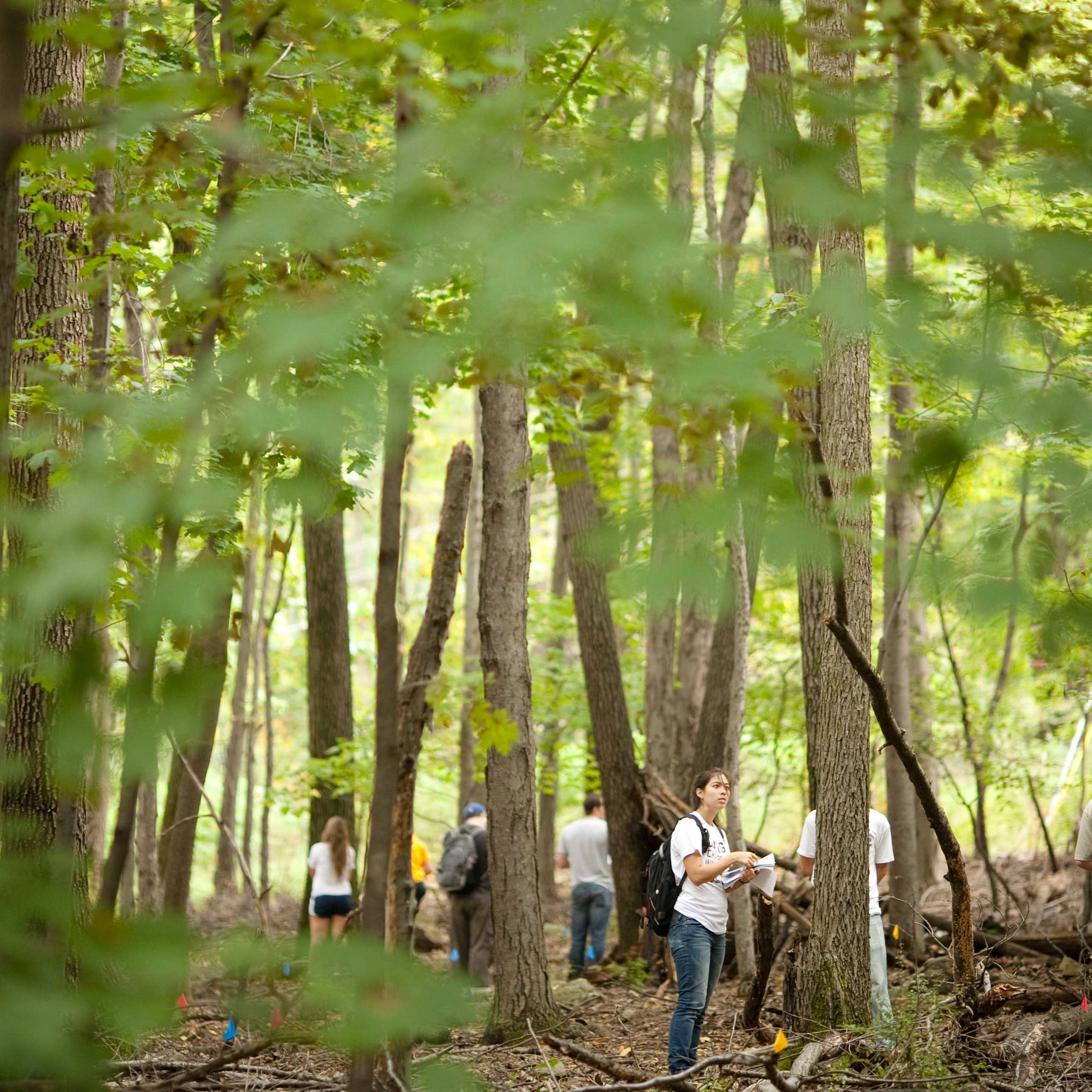
At its height, the arboretum featured approximately 3,000 trees, including nearly every species native to Pennsylvania, along with varieties from Europe and elsewhere in the United States. Nearby, a separate experimental plantation was established in 1915 to study which tree species would grow best in Pennsylvania’s soil, helping inform future restoration efforts.
The arboretum was more than a place for scientific study. Students and faculty visited to learn about trees, and the grounds featured an open-air theater, known as Top o’ The Mountain, where summer plays were performed in the 1930s.
As priorities shifted and the World Wars passed, the arboretum gradually faded from university life. By the 1950s, references to it had all but disappeared. The carefully planted trees became engulfed by the surrounding forest, and it slipped from maps and memories.
Its rediscovery came in 2011, when associate professor Robert Booth uncovered a collection of pressed plants known as a herbarium in the basement of Williams Hall. With help from Lehigh’s library and archives staff, he was able to retrace the boundaries of the long-forgotten forest.
Since then, faculty, students, and researchers have returned to the area to study its trees. It’s even become an outdoor classroom and a resource for student-driven research.
So, the Lost Forest isn’t just a campus legend. It’s a fascinating piece of Lehigh’s history that spent decades hidden in plain sight, and one that continues to offer opportunities for discovery.
The final verdict?
Not every campus legend has a tidy ending or explanation. Some can be traced to documented events, while others have just enough truth to keep the speculation alive. And a few leave us with more questions than answers.
But that may be part of what makes campus lore exciting and enduring. These stories transform familiar buildings, paths, and traditions into mysteries, connecting generations of students through a simple question, “Did you hear about…?”