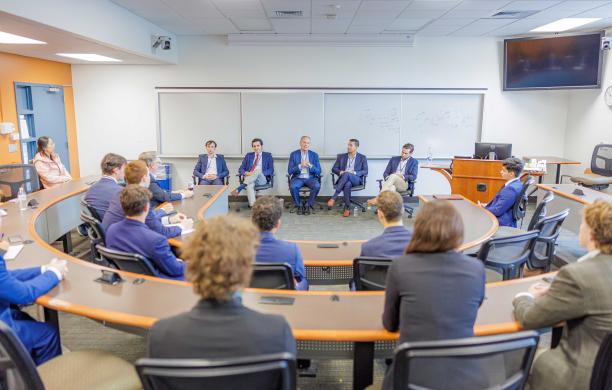

Dakota Feldman ’24 slides into a seat during an information session at Lehigh University, expecting the usual overview of majors, requirements, and student perks. It’s just another stop on her tour of colleges in Pennsylvania.
Then she hears about something new.
The university introduces the College of Health, with programs for students interested in medicine but not necessarily in becoming doctors. It focuses on public health, policy, and the broader systems that shape outcomes.
Something clicks.
“That’s it,” she thinks. “That’s exactly what I’m looking for.”
The rest of the tour feels different.
As she walks past academic buildings and across open greens, she can picture herself there. Not just as a student, but as part of something still being built.
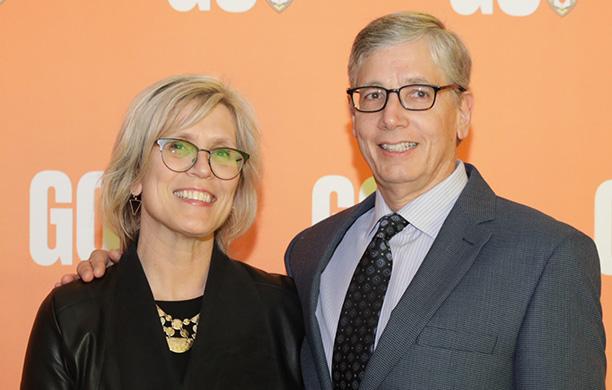
Beside her, her mother, Stefanie Trepper P’24, thinks the same thing.
“The more we heard about the College of Health, the more I thought, ‘I see you here. This is it,’” she says.
That moment set everything in motion.
Choosing Something New
Over the next four years, Dakota pursued a bachelor’s in population health as a member of the inaugural College of Health class. In its earliest days, she was helping to build something new, an experience that would later inspire her family to create the Dakota Feldman ’24 and Trepper Family Endowed Scholarship Fund.
“I’d always had an interest in medicine, although I didn’t know what that would look like for me,” says Dakota. “Lehigh opened my eyes to the idea that so many factors impact health other than what someone is experiencing in a clinic.”
By her final semester, a pre-physician assistant shadowing experience brought her path into focus. Moving through operating rooms, emergency departments, and specialty units, Dakota saw a role that matched both her curiosity and her patient-centered instincts.
“Lehigh has a good relationship with St. Luke’s University Health Network, so there are some amazing programs for students,” Dakota says. “While shadowing, I realized the autonomy physician assistants have, how respected they are, and how they’re able to practice across specialties.”
The shift was striking. The student who once gravitated toward systems and policy found herself drawn to the immediacy of clinical care, now with a perspective shaped by both.
That clarity was built over time through the kind of education she chose at the start.
Learning to See the Whole Picture
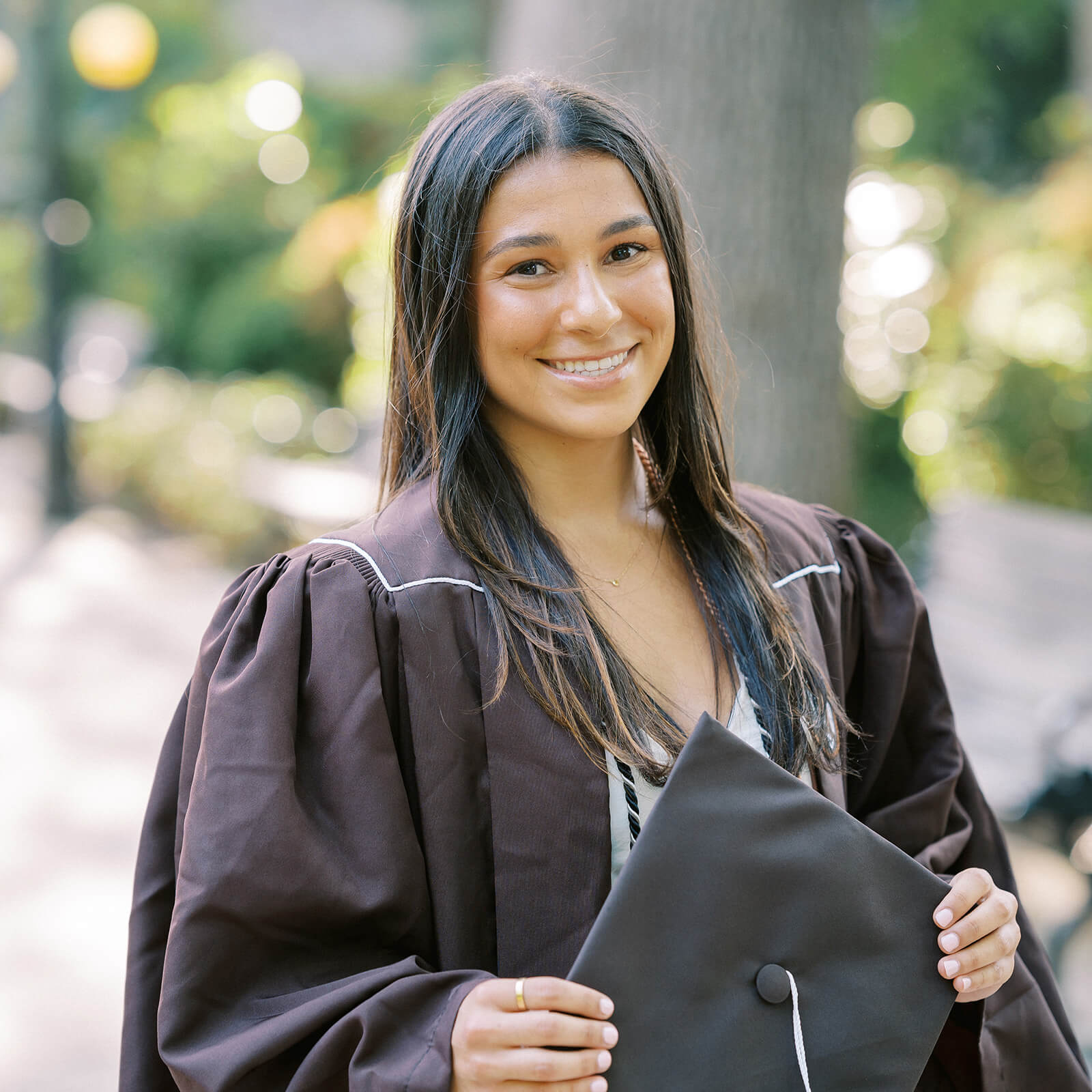
As part of the College of Health’s inaugural class, Dakota was part of something still taking shape.
She complemented her major with minors in global health, Indigenous people's health, and health, medicine, and society, further broadening her perspective on how care is delivered across communities.
She also served as inaugural co-president of the student advisory council, working closely with leadership to shape the student experience, while also engaging the broader campus community as an admissions fellow and tour guide.
“The ability to work so closely with campus leadership was pivotal,” she says. “We could have honest conversations about what’s working, what’s not, and what resources students need.”
Through interdisciplinary coursework and experiential learning, including studying abroad in Amsterdam, she developed a broader understanding of health, one that extended beyond symptoms to the conditions that cause them.
“I learned to see health through a holistic lens. If you treat someone and send them back to the same situation that made them sick, you’re not getting to the root of the problem.”
That perspective shaped how she approached both her studies and her clinical experiences. After graduating summa cum laude, she carried it with her to New York City, where she works as a medical assistant.
At home, the impact of her experience was just as evident.
Watching the Change
Stefanie says her daughter’s transformation was deeply meaningful.
She says Dakota began to “zoom out,” developing a deeper understanding of how public health, policy, and lived experience intersect, especially for underserved communities.
It wasn’t just academic growth; it was personal. Over time, she watched her daughter grow into a stronger leader and advocate, becoming more confident in who she was.
That growth, she believes, was shaped as much by the environment as the coursework. At Lehigh, Dakota wasn’t just moving through a system. She was part of a community where she felt known and supported.
“I never felt like she was just floating,” Stefanie says. “So many of my friends say their kids don’t feel like they have a voice at their universities — that wasn’t the case here. There were people who knew her, who guided her, who listened.”
That kind of experience doesn’t end at graduation. It shapes how a family sees opportunity and what they choose to do with it.
A Family Grounded in Purpose
For Dakota’s grandfather, Myron Trepper GP’24, the decision to give reflects a long-held family belief: When you’re in a position to help others, you should.
For him, that commitment is rooted in education and health care.
He had no prior connection to Lehigh before Dakota enrolled. But as he watched her take a chance on a brand-new college and find her place within it, he began to understand both the promise of the College of Health and the role philanthropy can play in sustaining it.
“The college was essentially a startup, and all startups need two things: a clear mission and people willing to invest in it,” Myron says.
For the Trepper family, the gift is also personal — a recognition of Dakota’s journey and the path she continues to build.
“I think it’s satisfying to see a young person finding her way in life and maintaining a relationship with this university,” he says.
Turning Experience Into Opportunity
The Dakota Feldman ’24 and Trepper Family Endowed Scholarship Fund grew out of family conversations about how best to make an impact.
At first, those conversations took shape through early support for experiential learning and community-based initiatives. Over time, they came back to a central idea: expanding access.
“We didn’t take for granted that Dakota had access to a top-notch education — something not everyone has,” Stefanie says. “If we could pay that forward, it was a no-brainer.”
The scholarship reflects that mindset, opening the door for more students to follow a path like Dakota’s.
In its first five years, the College of Health has built an interdisciplinary, experience-driven model that connects students to real-world challenges through research, community partnerships, and applied learning.
Scholarships help ensure that students can fully engage in those opportunities and pursue careers that address complex health challenges.
Carrying It Forward
Today, Dakota remains connected to the College of Health as a young alumna advisor on the dean’s advisory council, continuing the work she began as a student.
“Our family believes you should always know the people who have been there for you, recognize them, and put your best foot forward,” Dakota says.
As she prepares to apply to physician assistant programs, she carries with her the perspective that first drew her to Lehigh: Care doesn’t start in the exam room, and it doesn’t end there.
Through her family’s gift, that perspective will reach beyond her own journey to students finding their way, just as she did.